





By Megan Source:China Tibet EWS 2015-12-28
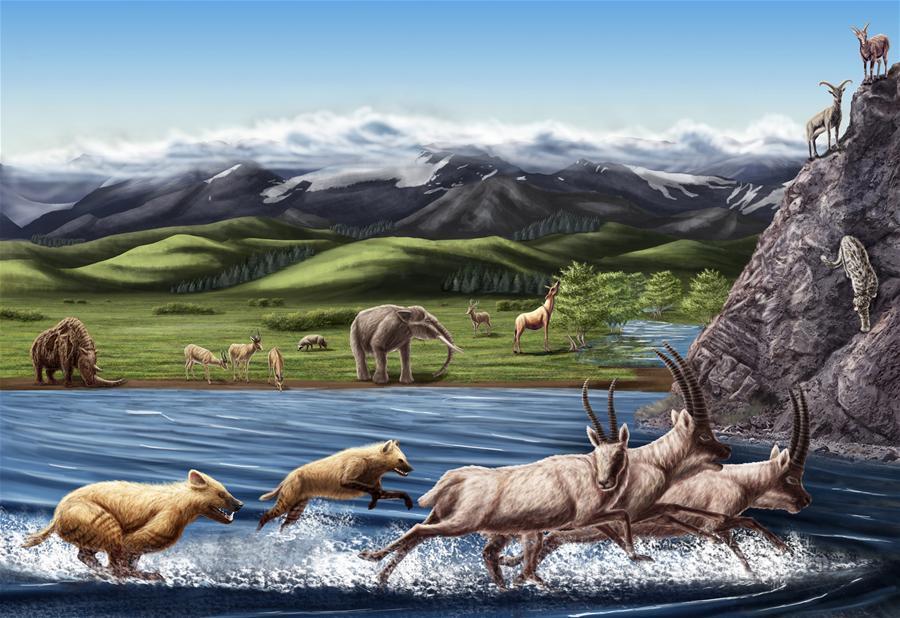
Photo shows the recovery picture of mammalian faunas paleoecology in Zanda basin during the Pliocene epoch. (Provided by Institute Of Vertebrate Paleontology And Paleoanthropology of the Chinese Academy of Sciences).
On December 23, the reporter understands from Institute Of Vertebrate Paleontology And Paleoanthropology of the Chinese Academy of Sciences, more than 4 million years’ hyena fossil has been discovered in Zanda basin of Ngari, Tibet. After many years’ study of fossils, some experts say that this is the first time that a large type of bone-crushing hyenas appeared and discovered on the Qinghai-Tibet Plateau, which is of great significance to studying the origin, diversity and paleogeographic distribution of hyenas.
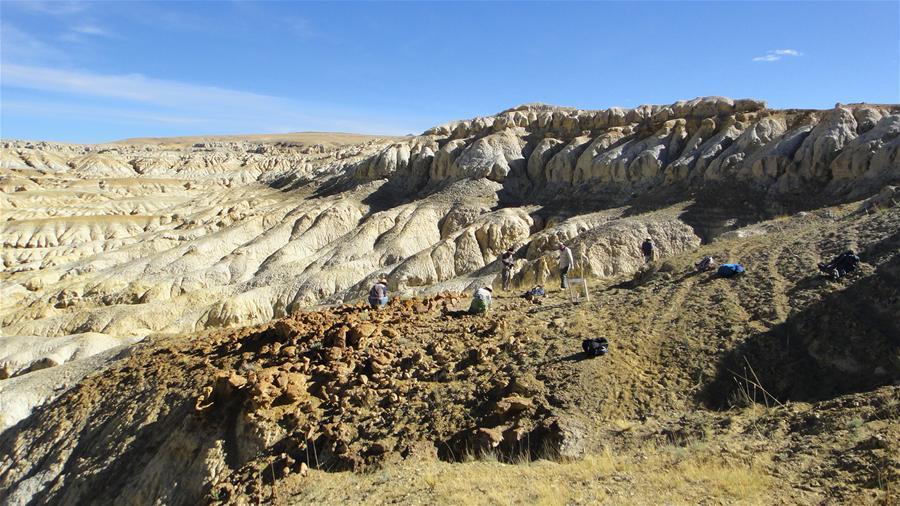
Photo shows the fossil excavation site. (Provided by Institute Of Vertebrate Paleontology And Paleoanthropology of the Chinese Academy of Sciences).
On December 23, the reporter understands from Institute Of Vertebrate Paleontology And Paleoanthropology of the Chinese Academy of Sciences, more than 4 million years’ hyena fossil has been discovered in Zanda basin of Ngari, Tibet. After many years’ study of fossils, some experts say that this is the first time that a large type of bone hyenas appeared and discovered on the Qinghai-Tibet Plateau, which is of great significance to studying the origin, diversity and paleogeographic distribution of hyenas.
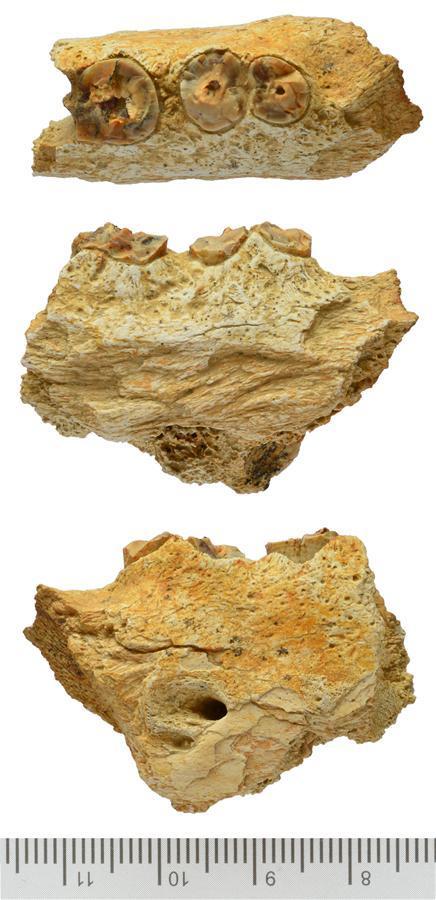
Photo shows the new perrier hyena fossil. (Provided by Institute Of Vertebrate Paleontology And Paleoanthropology of the Chinese Academy of Sciences).
Copyright © Xizang Daily & China Xizang News All rights reserved
Reproduction in whole or in part without permissions prohibited
Index Code: 藏 ICP 备 05000021 号
Producer: Xizang Daily International Communication Center