





By 智幸花 Source:Xinhua 2016-10-06
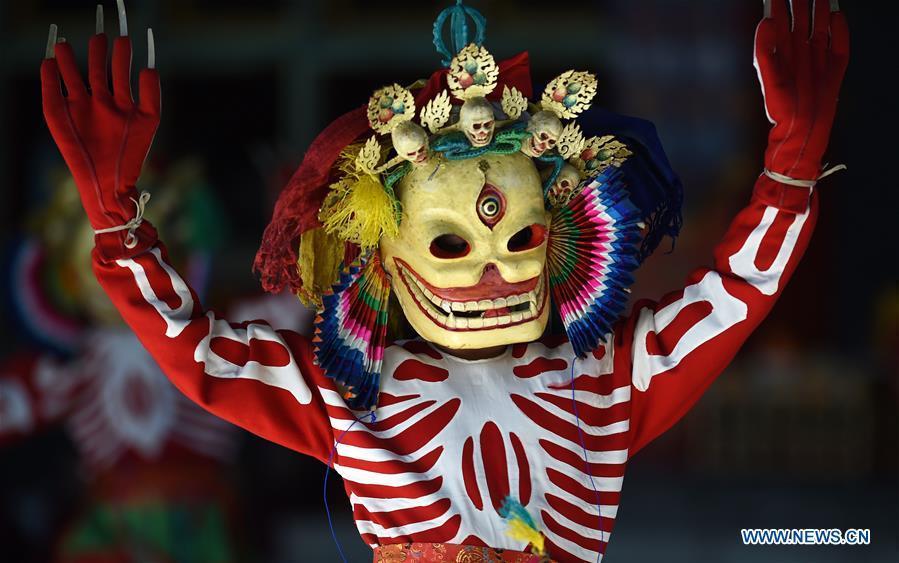
A lama performs cham dance at the Tashilhunpo Monastery in Xigaze, southwest China's Tibet Autonomous Region, Oct. 2, 2016. The dance, called "cham" in the Tibetan language, is believed to ward off disaster and ghost and bring luck and happiness. The dancers, usually lamas, wear masks of various animals and mythical figures as they perform to the accompaniment of religious music. (Xinhua/Chogo)
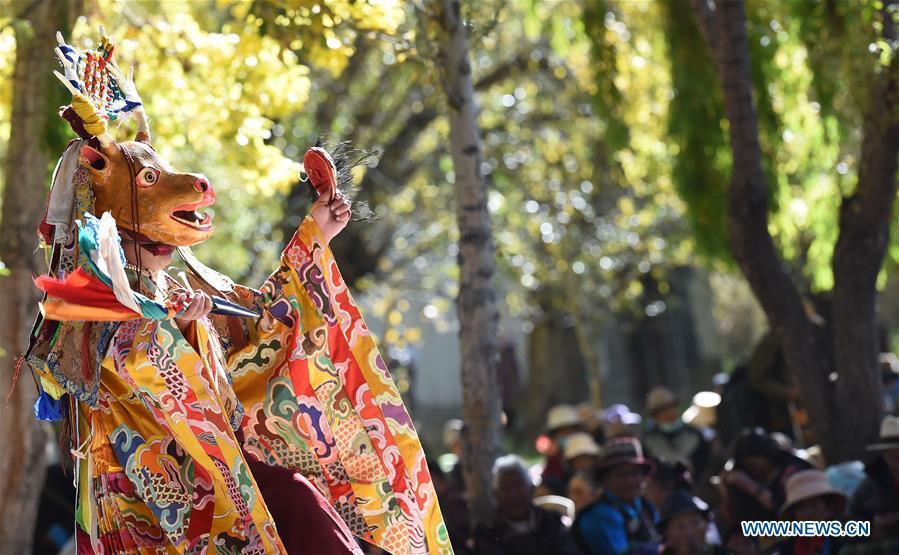
A lama performs cham dance at the Tashilhunpo Monastery in Xigaze, southwest China's Tibet Autonomous Region, Oct. 2, 2016. The dance, called "cham" in the Tibetan language, is believed to ward off disaster and ghost and bring luck and happiness. The dancers, usually lamas, wear masks of various animals and mythical figures as they perform to the accompaniment of religious music. (Xinhua/Chogo)
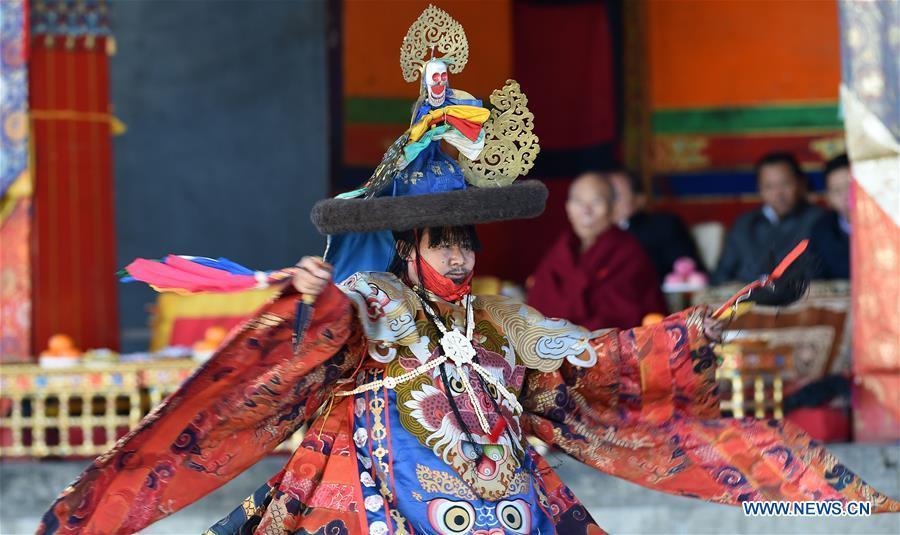
A lama performs cham dance at the Tashilhunpo Monastery in Xigaze, southwest China's Tibet Autonomous Region, Oct. 2, 2016. The dance, called "cham" in the Tibetan language, is believed to ward off disaster and ghost and bring luck and happiness. The dancers, usually lamas, wear masks of various animals and mythical figures as they perform to the accompaniment of religious music. (Xinhua/Chogo)
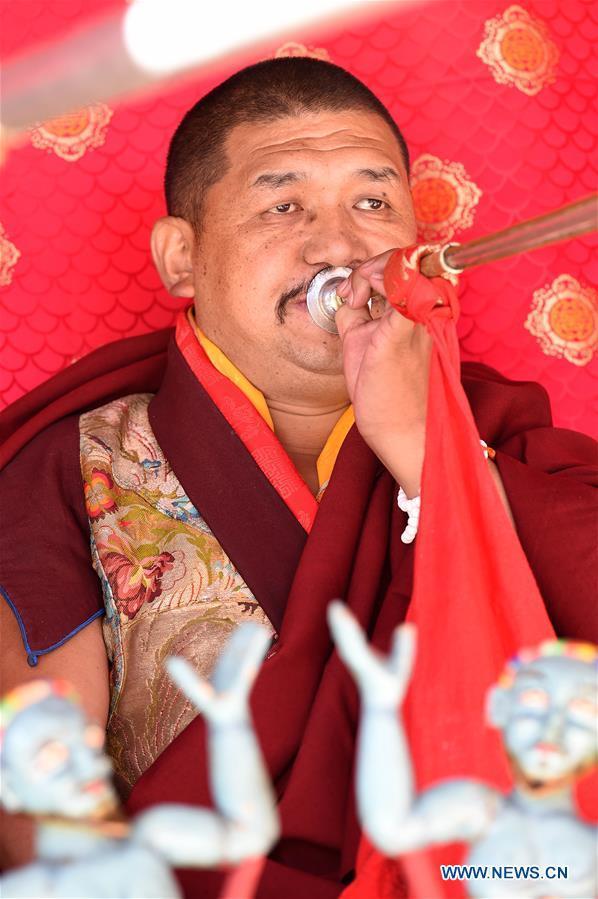
A lama blows a religious horn during the performance of cham dance at the Tashilhunpo Monastery in Xigaze, southwest China's Tibet Autonomous Region, Oct. 2, 2016. The dance, called "cham" in the Tibetan language, is believed to ward off disaster and ghost and bring luck and happiness. The dancers, usually lamas, wear masks of various animals and mythical figures as they perform to the accompaniment of religious music. (Xinhua/Chogo)
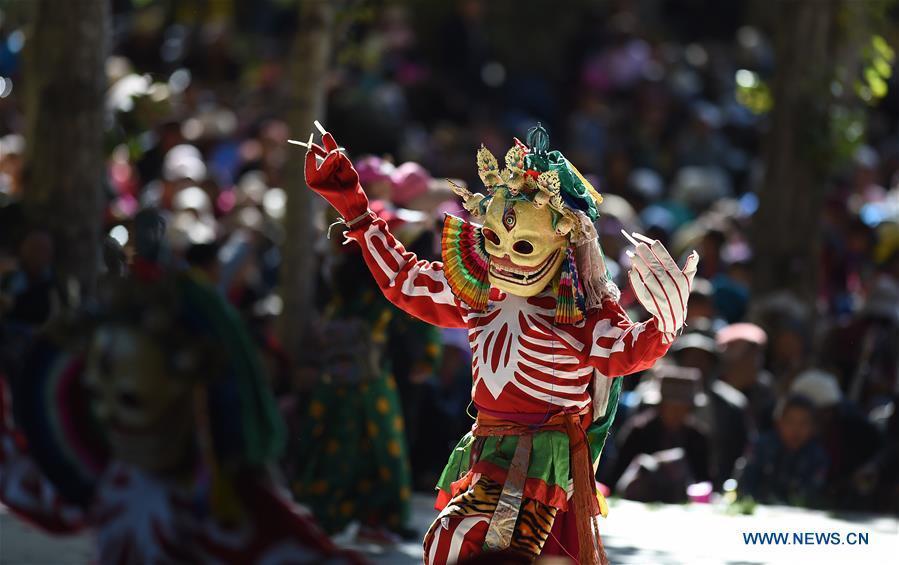
A lama performs cham dance at the Tashilhunpo Monastery in Xigaze, southwest China's Tibet Autonomous Region, Oct. 2, 2016. The dance, called "cham" in the Tibetan language, is believed to ward off disaster and ghost and bring luck and happiness. The dancers, usually lamas, wear masks of various animals and mythical figures as they perform to the accompaniment of religious music. (Xinhua/Chogo)
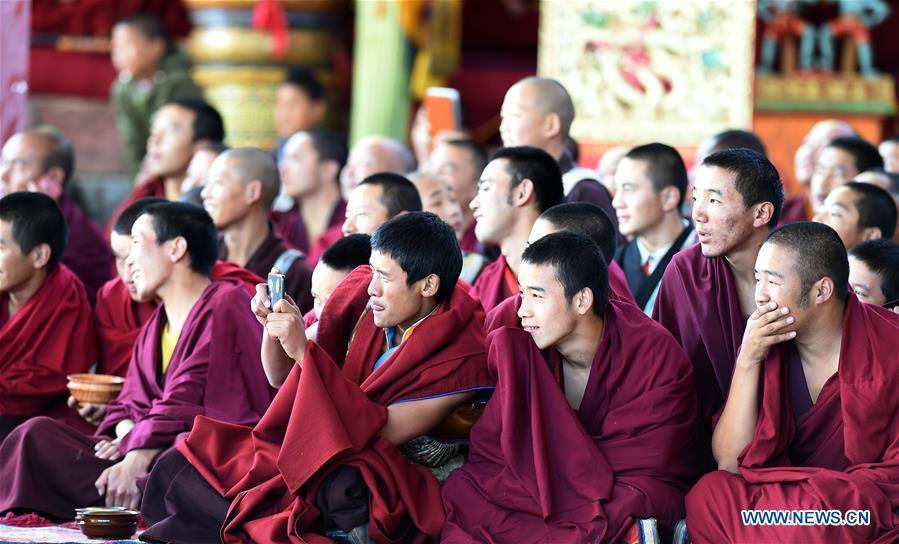
Lamas watch cham dance at the Tashilhunpo Monastery in Xigaze, southwest China's Tibet Autonomous Region, Oct. 2, 2016. The dance, called "cham" in the Tibetan language, is believed to ward off disaster and ghost and bring luck and happiness. The dancers, usually lamas, wear masks of various animals and mythical figures as they perform to the accompaniment of religious music. (Xinhua/Chogo)
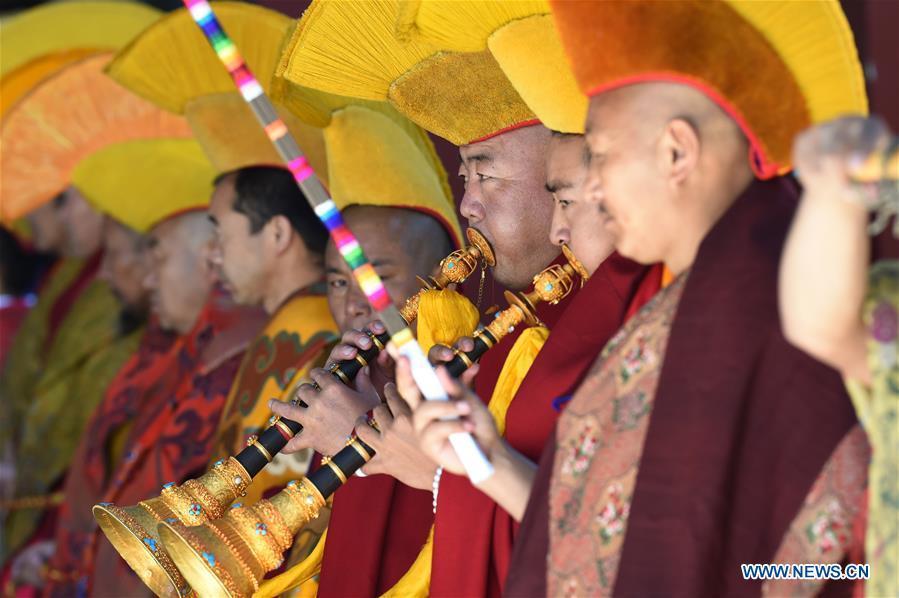
Lamas blow religious horns during the performance of cham dance at the Tashilhunpo Monastery in Xigaze, southwest China's Tibet Autonomous Region, Oct. 2, 2016. The dance, called "cham" in the Tibetan language, is believed to ward off disaster and ghost and bring luck and happiness. The dancers, usually lamas, wear masks of various animals and mythical figures as they perform to the accompaniment of religious music. (Xinhua/Chogo)
Copyright © Xizang Daily & China Xizang News All rights reserved
Reproduction in whole or in part without permissions prohibited
Index Code: 藏 ICP 备 05000021 号
Producer: Xizang Daily International Communication Center