





By Liu Fang, Zhi Xinghua Source:China Tibet News 2019-06-05
In recent years, with the increasing protection of wildlife in Tibet, the number of Tibetan antelope has increased from more than 60,000 in the 1990s to over 200,000 at present. In addition, people's awareness of protection is also increasing. During the annual migration season, forestry departments escort Tibetan antelopes, too.
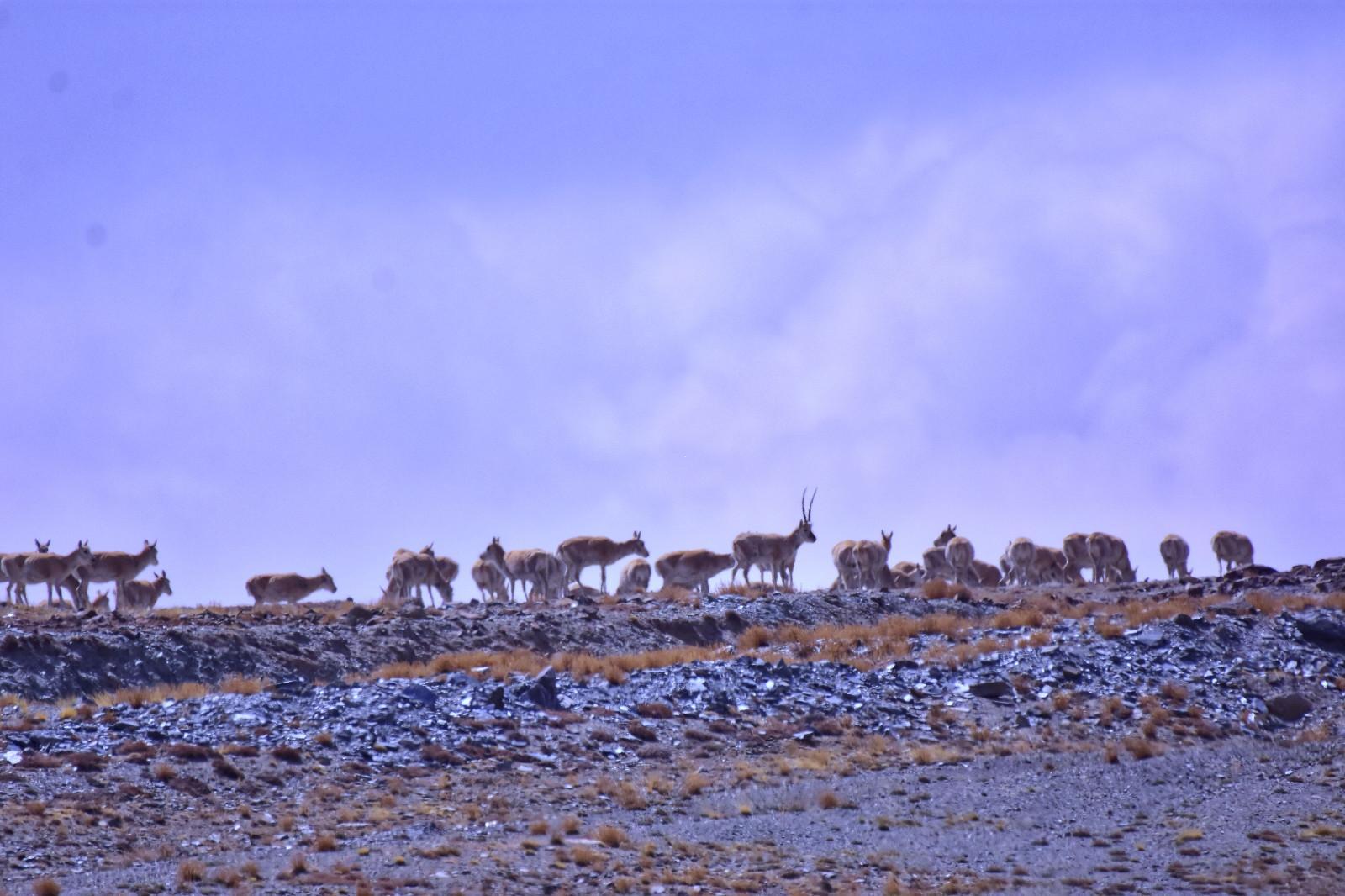
Photo shows migratory Tibetan antelopes. [China Tibet News/Li Haixia]
The overall migration direction is from south to north
Every year from late October to mid-November, Tibetan antelopes begin to mate. In May of the following year, they begin to migrate to give birth. According to experts, a month before this, Tibetan antelopes will gather in large numbers, after which they will migrate from the winter mating grounds to the summer breeding grounds. During this period, it may take more than a month. In other words, the migration time of Tibetan antelopes is from mid-April to July every year.
Tibet's Changtang National Nature Reserve is the home of Tibetan antelopes. Due to the vast area of Changtang, the migration routesof Tibetan antelopes are also different. Therefore, they are divided into Tibetan antelopes in the south and those in the north. The overall migration direction is from south to north. Besides, Tibetan antelopes in Tibet will also migrate to Xinjiang and Qinghai.
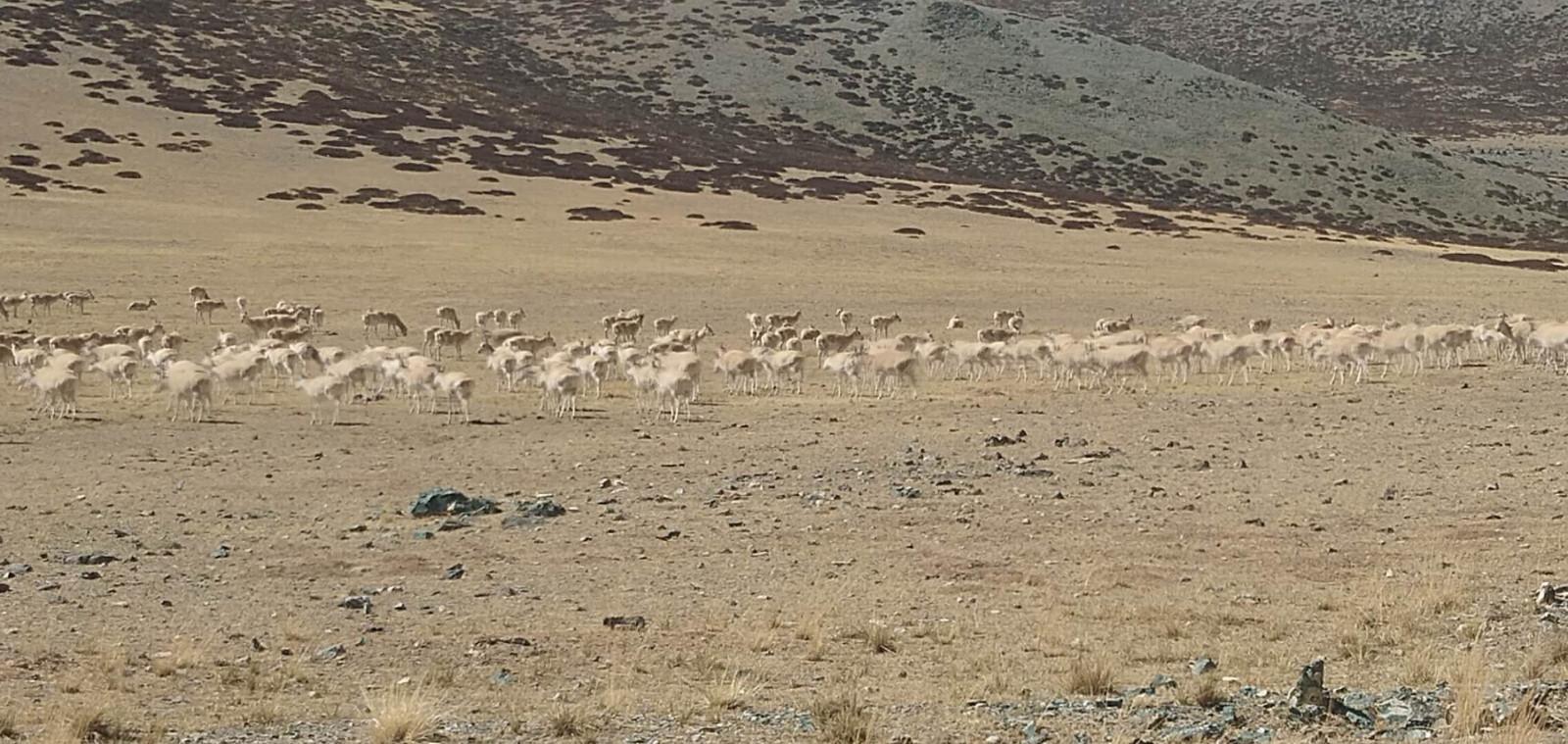
Photo shows migratory Tibetan antelopes. [Photo provided by Forestry and Grassland Bureau of Nagqu City]
Water and grass along the way determine the daily migration distance
The exact reason of Tibetan antelopes' migration is still unclear. Their migration routes also have no more exact statement. However, from the general information we have so far, the migration of Tibetan antelopes in Changtang is obviously different from that in north and south. The migration route of Tibetan antelopes in the north is very long, ranging from 300 to 400 kilometers; that of Tibetan antelopes in the south is shorter, which is about 100 kilometers.
In fact, at this time of every year, male and female Tibetan antelopes move in separate groups--adult females and their female offspring migrate to the breeding grounds, while males do not participate in the migration.The baby antelopes can run soon after birth, so after the birth, the female antelopes will take the babies back to the original habitat.
Since only female Tibetan antelopes are involved in this season's migration, and they are pregnant, the daily migration distance is not very long, averaging 10-20 kilometers.“The length of the daily migration is related towater and grass along the way. If they come across a place rich in water and grass, they stay a few days longer. If the water and grass is not good along the way, they will go straight ahead.” A worker from Forestry and Grassland Bureau of Ngari Prefecture introduces.
"The Tibetan antelopes, who have long journeys, set out relatively early.So far, this year's migratory Tibetan antelopes are still on the way. Of these, only 200 have migrated to the breeding grounds in Burang County." The worker says, "of course, not all Tibetan antelopes give birth to their young after arriving at the breeding grounds, some of them will also do this on the halfway, then join up with the large group and go back together.”
Copyright © Xizang Daily & China Xizang News All rights reserved
Reproduction in whole or in part without permissions prohibited
Index Code: 藏 ICP 备 05000021 号
Producer: Xizang Daily International Communication Center