




Source:Xinhua 2021-01-14
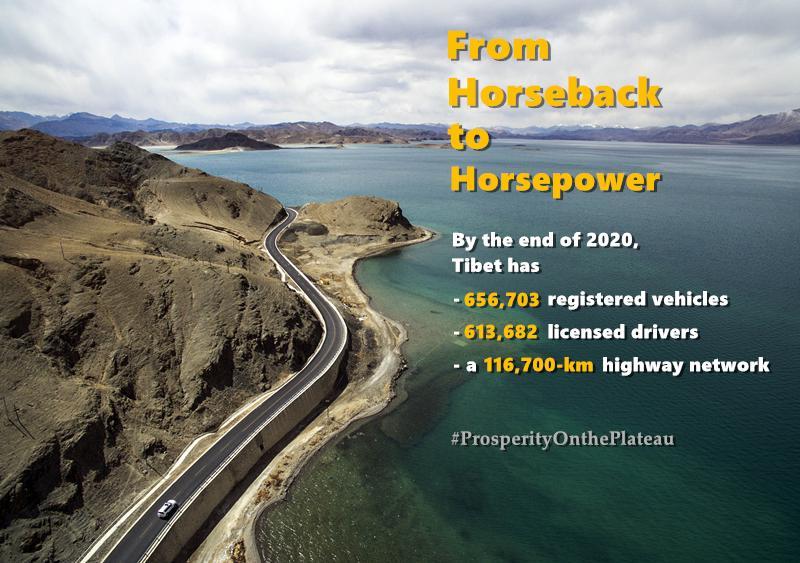
By the end of 2020, thanks to an improved transportation network coupled with higher incomes in Tibet, there were 656,703 registered vehicles and 613,682 licensed drivers across the southwestern Chinese region.
LHASA, Jan. 13 (Xinhua) -- Geisang has just bought a 230,000-yuan (35,512 U.S. dollars) Toyota SUV. The car means his 6-km commute in the city of Lhasa, Tibet Autonomous Region, will now take just 15 minutes.
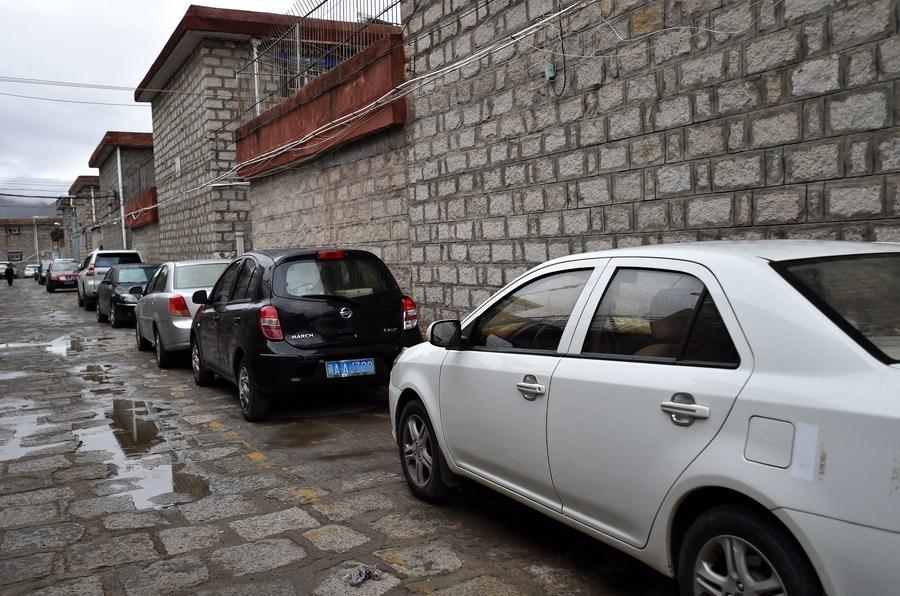
Photo taken on July 5, 2019 shows cars parked at a residential community in Lhasa, capital of southwest China's Tibet Autonomous Region. (Xinhua/Chogo)
Owning a car was once far out of reach for ordinary Tibetans before the peaceful liberation of Tibet in 1951, with car ownership limited to the privileged few. Back then, there were no concrete roads, and cars had to be disassembled and transported to the plateau on horses and mules' backs. After reassembly, the roads they ran on were little more than dirt tracks.
In the remote mountain village of Baka in Ali Prefecture, Soinam Doje, 66, recollects his youth. When he was little, to leave the valley his family had to row a cattle-skin raft across the Pagri River's rapid waters. After that, they had to walk; only rich people rode horses.
Today, every household in Baka uses a pickup truck to drive their flocks.
"I couldn't imagine that our once muddy legs would ever step on an accelerator pedal," said Soinam.
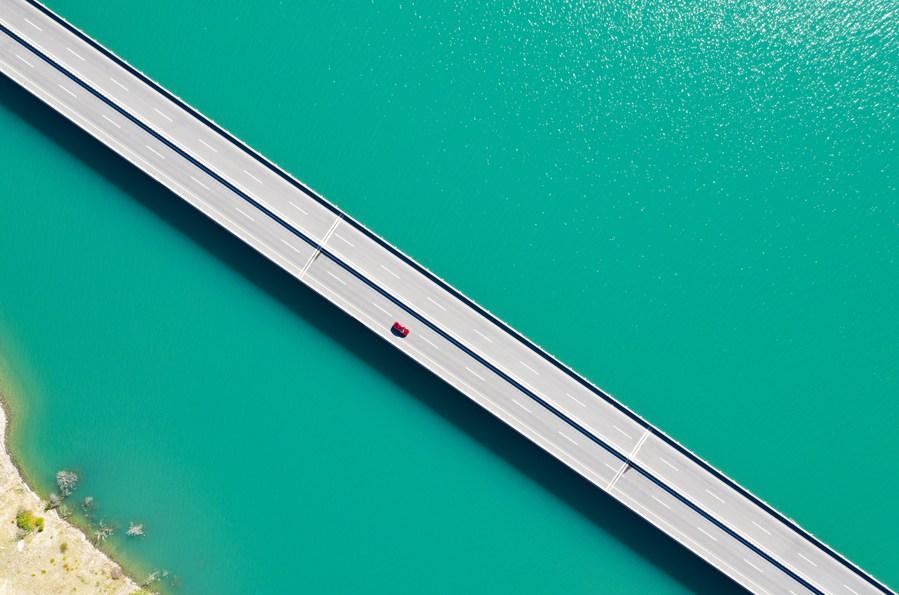
A car runs on the Duobu bridge in Nyingchi, southwest China's Tibet Autonomous Region, Oct. 28, 2019. (Xinhua/Purbu Zhaxi)
Today, paved roads link Baka with other parts of Tibet, connecting it to a highway network that weaves 116,700 km across the southwestern Chinese region.
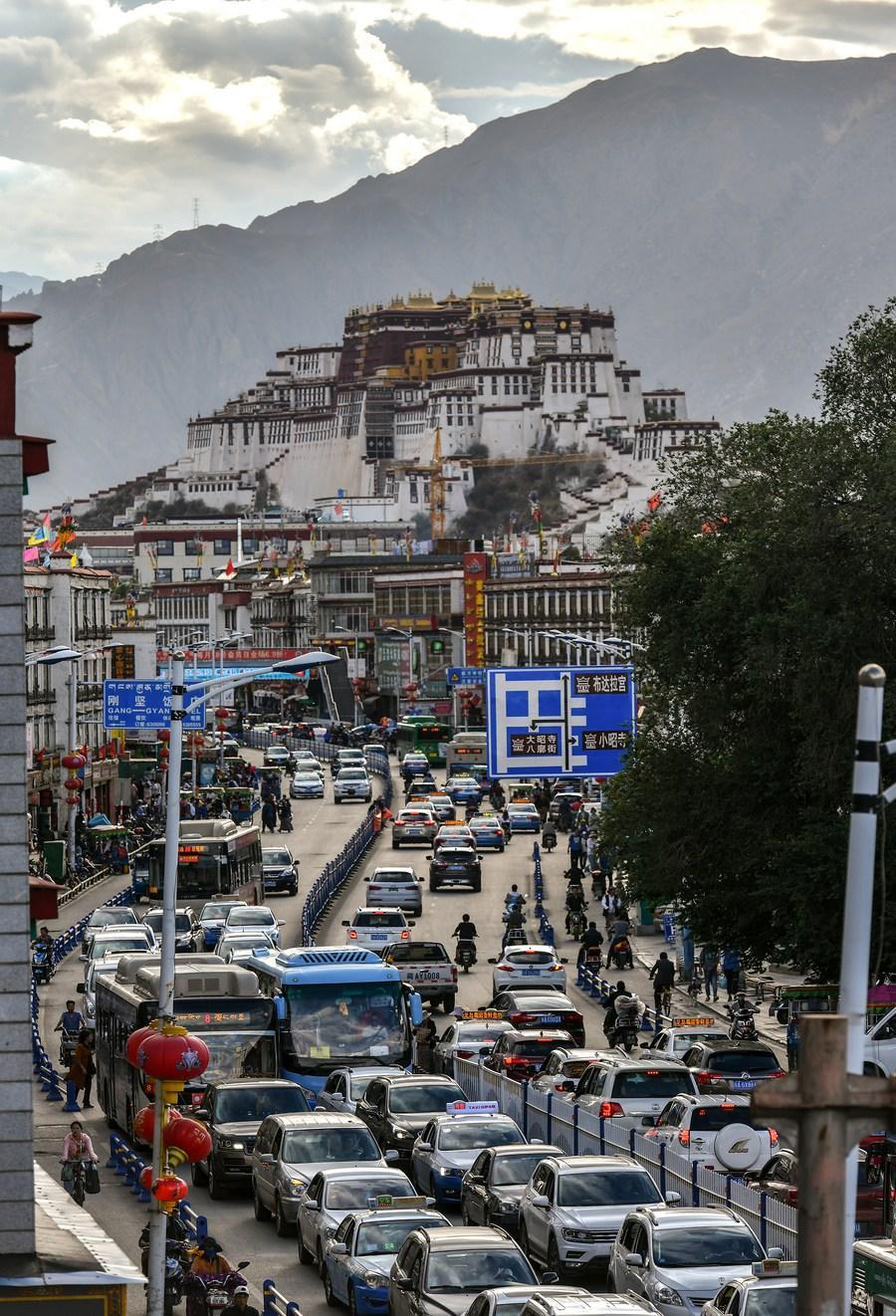
Cars drive on a street in Lhasa, capital of southwest China's Tibet Autonomous Region, July 4, 2019. (Xinhua/Li Xin)
The improved transportation network means that modes of transport, too, have developed. By the end of 2020, Tibet had 656,703 registered vehicles and 613,682 licensed drivers. Every day in 2020, the region recorded the registration, on average, of 166 vehicles.
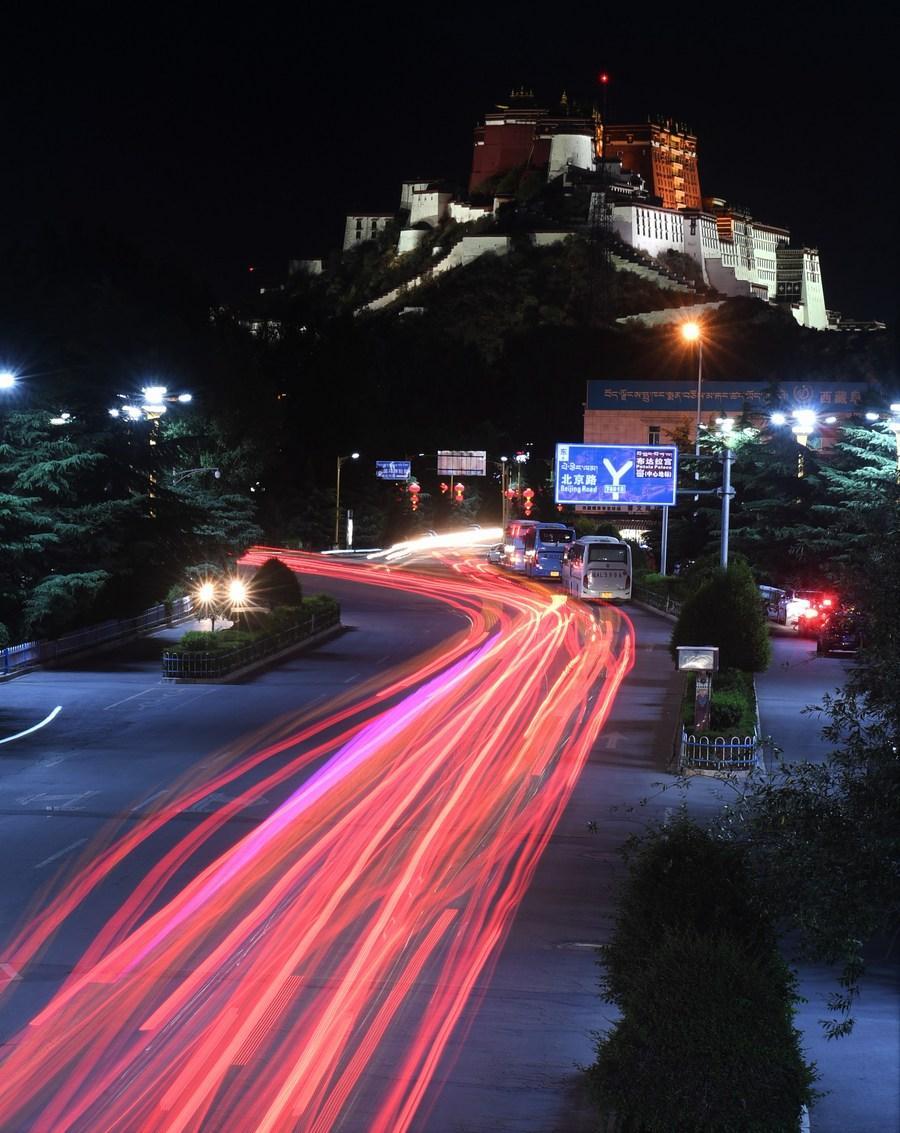
Cars drive on a street in Lhasa, capital of southwest China's Tibet Autonomous Region, July 4, 2019. (Xinhua/Purbu Zhaxi)
"Every household owns a motorcycle or vehicle. Hardly anyone travels on horseback now," said Qoigyi Sangmu in Zanda County.
A confident rider since childhood, Qoigyi remembers when a road was first built to the village, and her father sold the family horse. Keen to get behind the wheel, Qoigyi soon learned to drive and was the first woman in her village to obtain a driving license. Driving offered a better way to navigate her surroundings and opened up new opportunities, one being a steady job in the town.
The vehicle boom in Tibet reflects the improved lives of its residents. The growth rate of Tibet's per capita disposable income ranks first among all provincial regions across the Chinese mainland. The per capita disposable income of urban residents in 2020 is estimated to reach 40,777 yuan, while rural residents' per capita disposable income will hit 14,583 yuan.
"In the past, the criteria for an affluent Tibetan family was owning a lot of cattle and sheep plus a good house," said Nima, a herder in Nagqu, "Now we have one more criterion -- owning a car."
Copyright © Xizang Daily & China Xizang News All rights reserved
Reproduction in whole or in part without permissions prohibited
Index Code: 藏 ICP 备 05000021 号
Producer: Xizang Daily International Communication Center