





Source:xzxw.com 2026-02-14
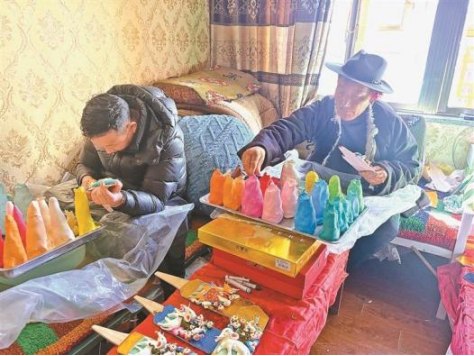
Norbu (R) and his apprentice crafting butter sculptures together
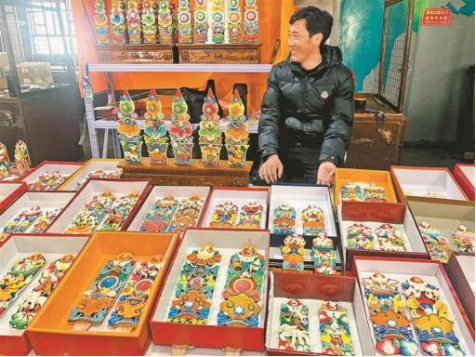
Tagye'sstall, a vendor from Pusum Township, RinbungCounty
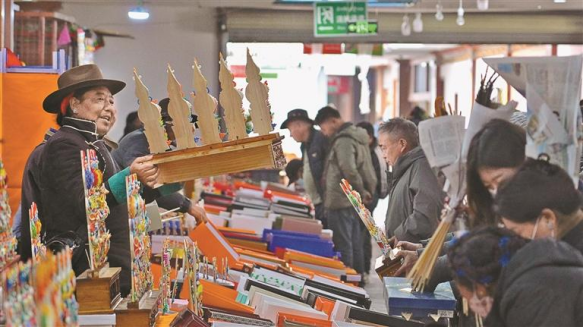
Butter sculpture stalls on the third floor of Lhasa's Barkhor shopping market
Red, yellow, blue, green—more than a dozen pieces of vibrantly colored butter are neatly arranged beside a basin of water. Norbu picks up piece after piece, submerging them in water and kneading them repeatedly. With a small wooden knife, he carefully carves and shapes. In moments, the forms of sun, moon, stars, flowers, vines, birds, and beasts emerge one after another. Under the guidance of skilled hands, these delicate butter creations are skillfully assembled and affixed to a shield-shaped wooden board. A colorful, lifelike butter sculpture blossoms into view.
Norbu, an inheritor of the intangible cultural heritage of butter sculpture-making, is from Pusum Township, Rinbung County, Xigaze, Xizang. As the Spring Festival and Tibetan New Year approach, the butter sculptures he and his apprentices produce together have become a must-have New Year item, selling briskly in Lhasa's markets. They not only add a unique intangible cultural heritage charm to the festive season but have also become a vital pillar for local villagers to increase their incomes.
About his lifelong bond with butter sculpture, Norbu tells his story unhurriedly. Influenced by his family legacy and guided meticulously by his mentor, he began taking on apprentices and teaching alongside like-minded partners in 1985. From 1999 to 2012, with government support, he took the lead in establishing a specialized cooperative. The scale of butter sculpture production expanded steadily, and the transmission of the craft became more structured and orderly.
Over the years, Norbu has trained more than 400 apprentices. Every year before Tibetan New Year, he organizes a month-long intensive training session, after which he leads the group to Lhasa to jointly create butter sculptures. Many apprentices, after mastering the craft, have achieved great skill and supported themselves through this art. Today, makingbutter sculpturehas become a crucial pillar for the development of the local village collective economy and a primary source of income for improving villagers' lives. In many households, entire families participate in the production—everyone is a bearer of this heritage.
The process of making butter sculptures is meticulous and tolerates no carelessness. Norbu's apprentice, Tsering, gradually became a master through long-term refinement and exploration. Polishing, kneading, shaping, composing—every step isvital. As the afternoon light filters into the room, Tsering's hands never pause. Working in the cold, sculpting butter requires repeatedly dipping one's hands into icy water to shape the material. The biting chill, however, does nothing to diminish his passion for this craft.
"I started learning to make butter sculptures in 2013, and I've made considerable progress since then," Tsering says, pointing to the butter sculpture before him. He explains that some of these patterns symbolize family harmony and ethnic unity, while others express wishes for the elderly to stay healthy and children to grow strong. "Before I learned this craft, I had nothing to do at home. But after systematically studying under my teacher, I not only mastered this skill but can also support myself and my family with it." Tsering's are grateful, and his outlook for the future is brimming with hope. He says that once his skills are refined and he reaches a certain level of mastery, he too wishes to take on apprentices and pass on the craft, just like his teacher. He is fully confident that this intangible cultural heritage will be carried forward.
In Lhasa's Barkhor shopping market, the brand "Nyemo Yadong Butter Sculpture" stands out prominently. The butter sculptures, meticulously crafted by the masters, are packaged to standard and transported to the market for sale. Before the New Year, over 70 butter sculpture stalls line the market, most of their operators hailing from Rinbung County, Xigaze. They get to here each year specifically to create and sell their works. As midday approaches, row upon row of butter sculptures are neatly displayed. Traditional shapes like lotuses, auspicious clouds, and carp appear lifelike and exquisitely crafted, drawing many citizens and tourists to stopto purchase.
"Last year, I earned over ten thousand yuan(RMB) from this craft alone. Judging by this year's market, my income is sure to rise," says Tagye, a vendor from Rinbung County, his face beaming with joy. His words clearly demonstrate the "gold content" of this intangible heritage. In 2025, butter sculpture sales involving Kangxung Township and Pusum Township in Rinbung County generated over 6 million yuan in revenue, with practitioners averaging a monthly income of 14,300 yuan during the sales period. In 2026, sales revenue is projected to reach approximately 9 million yuan. A skilled artisan can earn around 1,500 yuan per day, and even ordinary craftspeople can maintain a stable daily income of over 800 yuan.
Apiece of small butter sculpture carries not only the festive blessings of the snow-covered plateau but also weaves together the legacy of an intangible cultural heritage. Amid the joyous atmosphere of the SpringFestivaland the Tibetan New Year, it radiates a unique brilliance that transcends time.
Reporters: Ma Xiaoyan
Translators: Zheng Yujie, Liu Fang
Reviews: Drakpa Wangchen, Phurbu Tsering
Copyright © Xizang Daily & China Xizang News All rights reserved
Reproduction in whole or in part without permissions prohibited
Index Code: 藏 ICP 备 05000021 号
Producer: Xizang Daily International Communication Center