





Source:xzxw.com 2026-04-30
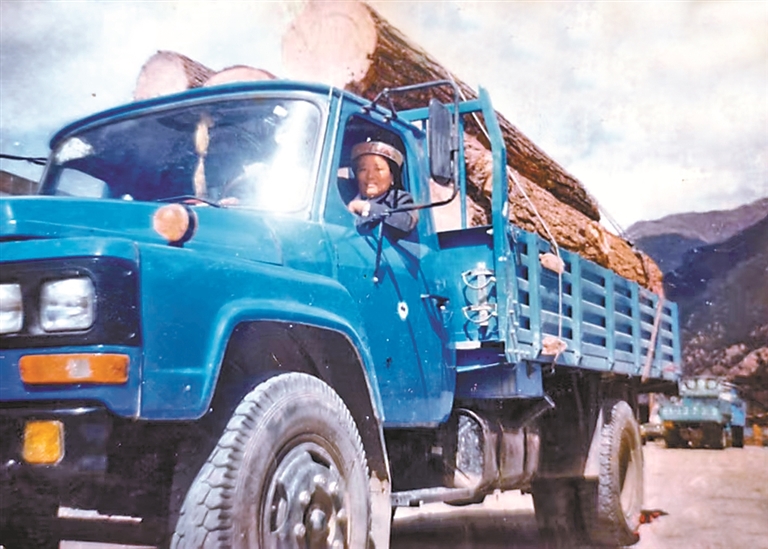
The first car of Khamtrul's family. [File photo provided by the interviewee]
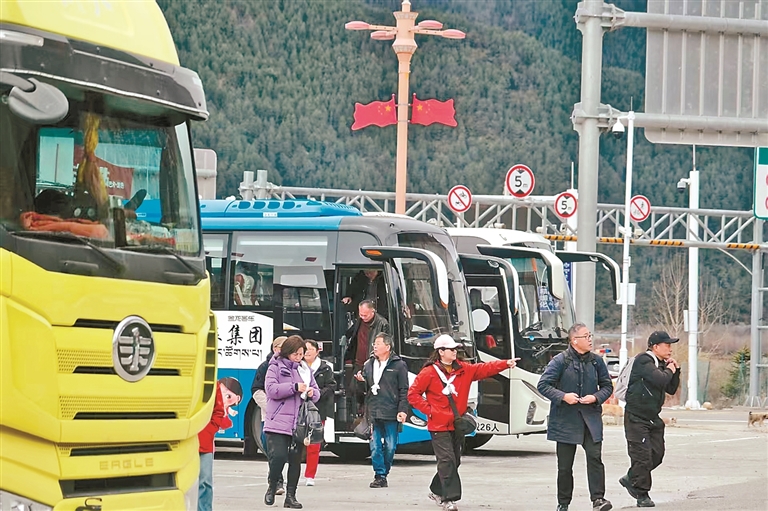
Bahe Town welcomes a large number of tourists every day.
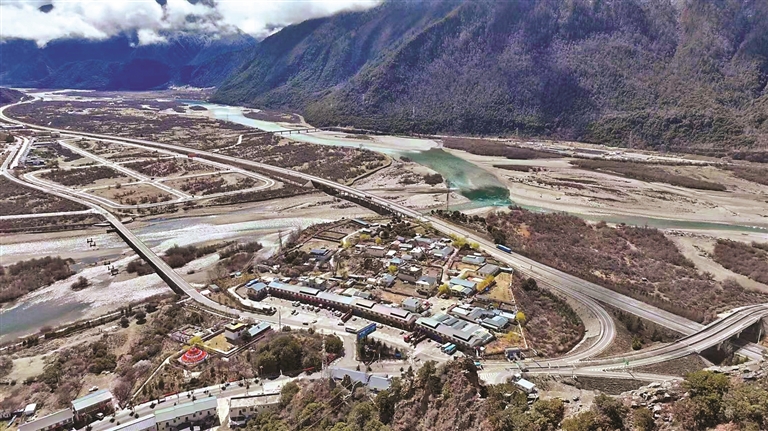
Photo shows Nangse Village with its well-connected transportation network. [Photo/Xue Ying]
Turning to the front page of the Xizang Daily on December 1, 2004, a piece of exciting news read: "Nangse Village in Bahe Town, Gongbo'gyamda County, has become the first village in Xizang Autonomous Region with a per capita annual net income exceeding 10,000 yuan, reaching 16,167 yuan."
Twenty-two years have passed. The newspaper has yellowed, but how has this "first 10,000-yuan village" developed?
Rows of shops, bustling traffic, peach blossoms contrasting with newly built buildings... A special coverage team from the Xizang Daily, on the occasion of its 70th anniversary, visited Nangse Village with that old newspaper in hand. What greeted them was not a traditional rural scene, but a modern, urban-like atmosphere.
In 2025, the per capita disposable income of Nangse Village reached 39,537 yuan, 1.7 times the average level of farmers and herders in the region. The figures on paper align with the reality before their eyes: this village, traversed by the Lhasa-Nyingchi Highway and National Highway 318, has transformed thanks to roads, grown prosperous through change, and written a remarkable chapter of rural revitalization with three major transformations.
First transformation: Moving out of the mountains
"Back then, we dared to move out because we believed that once the roads were open, life would get better. Looking back now, we made the right choice!" Said village Party branch secretary Pasang Norbu, pointing to National Highway 318.
In 1999, the villagers of Nangse, who had lived for generations in deep, narrow valleys, saw a turning point in their fate. Previously, the per capita arable land was less than one mu, and the highland barley they grew barely kept them from hunger. Gathering wild pine mushrooms and digging for medicinal herbs was a gamble. The resurfacing of the nearby National Highway 318 gave villagers the chance to take on construction work, earning an extra 3,000 yuan per capita that year — their "first bucket of gold" for starting businesses.
An even bigger opportunity came with the start of small-town construction in Bahe Town. Bahe Town is a must-pass for self-driving tourists on National Highway 318 heading into Xizang, and also the gateway to Basum Tso Lake, a national 5A scenic area. Tashi Kongbo, then village director, was excited, "opening shops in the town will surely lead to a better life than farming!"
Yet leaving their homeland was hard. The village cadres went door to door explaining policies and calculating benefits. County-level support policies followed, offering subsidies for housing construction ranging from 2,000 to 4,000 yuan per household.
Encouraged by policies, 17 households took the step to relocate. Yangjen, then 22, took out a loan of over 20,000 yuan to open a bar by the highway, earning 70,000–80,000 yuan a year. Her neighbor Khamtrul turned her storefront into a hostel, which became the first choice for overnight stays for passing drivers. The success of the first relocating households reassured the rest. "In the first year of opening shops, the village's per capita income exceeded 2,000 yuan," Tashi Kongbo recalled.
As tourism boomed in Xizang in the early 2000s, more self-driving tourists traveled along National Highway 318. The enterprising villagers of Nangse seized the moment, opening home-stays and specialty eateries. In 2004, Nangse became Xizang's first administrative village with a per capita income exceeding 10,000 yuan. That year, all 21 households in the village had built two-story houses, owned 53 shop spaces, and 13 families bought trucks to run transport businesses.
Second transformation: Shifting up a gear
National Highway 318 set Nangse on the path to prosperity. In 2013, construction began on the Lhasa-Nyingchi Highway, accelerating the village's development even further.
Pema Lhundrup, born in 1981, had been driving long-haul trucks before 2013. When he learned about the highway project, he took out a loan of 2 million yuan to buy excavators and loaders, diving into construction work. He earned 700,000 yuan that year. In 2017, he founded a construction company and became a well-known success story in the village. By 2025, he had built a 1,800-square-meter tourist hotel in Bahe Town. "From trucking to tourism, the Party's good policies have put me on the road to wealth," Baima Lunzhu said.
While the younger generation injected vitality into Nangse's development, the older generation held onto the village's foundations. Dawa Tsering, 63, used to drive on the highway for years and saved up a fortune. He gave up long-haul trucking and built a new 200-square-meter house next to his old home by the roadside. Even before completion, it was rented out, bringing in 24,000 yuan per year, plus rental income from his shop space — nearly 100,000 yuan annually.
These success stories reflect Nangse's journey: the figures are just a mirror; the more important thing is that the villagers are living increasingly prosperous lives.
Third transformation: Upgrading and pivoting
In September 2015, sections of the Lhasa-Nyingchi Highway opened to traffic. While convenient transportation brought more tourists, it also meant that passing vehicles no longer needed to stop midway. Nangse's traditional "transit economy" faced new challenges.
Change was imperative. The Bahe Town Party Committee clarified the direction: shift from being a "passageway" to becoming a "tourist destination," making visitors willing to stop and stay.
In 2016, Bahe Town was included in a regional-level characteristic small-town construction project, with an investment of 270 million yuan that upgraded infrastructure. The Tibetan-style town gradually took on the look of a destination.
The development of Bahe Fish Restaurant vividly illustrates this transformation. From two small shops, it has grown into a courtyard-style restaurant with annual profits of 400,000 yuan. "Bahe Fish" has become a local specialty, attracting food lovers from near and far. "This year's extended holidays coupled with the 'Winter Tour in Xizang' policy — we haven't rested a single day," said owner Zhang Jianlan.
Sonam Chosphel, Party secretary of Bahe Town, said, "with the opportunity of the Basum Tso Lake loop tourism development, we aim to bring Nangse into the scenic area's sphere, so that villagers can steadily earn a living from tourism."
Through three splendid transformations, the people of Nangse, thriving on roads, have forged their own path. Each transformation represents an industrial upgrading and a breakthrough in mindset. Keeping pace with the times, Nangse has moved from poverty to revitalization — a microcosm of the bold progress made by countless villages across the plateau.
Reporter: Wang Yifei, Zhang Xiaoming, Xie Xiaochun, Xue Ying
Translator: Zhi Xinghua
Review: Phurbu Tsering, Drakpa Wangchen
Copyright © Xizang Daily & China Xizang News All rights reserved
Reproduction in whole or in part without permissions prohibited
Index Code: 藏 ICP 备 05000021 号
Producer: Xizang Daily International Communication Center