



Source:chinadaily.com 2026-08-18
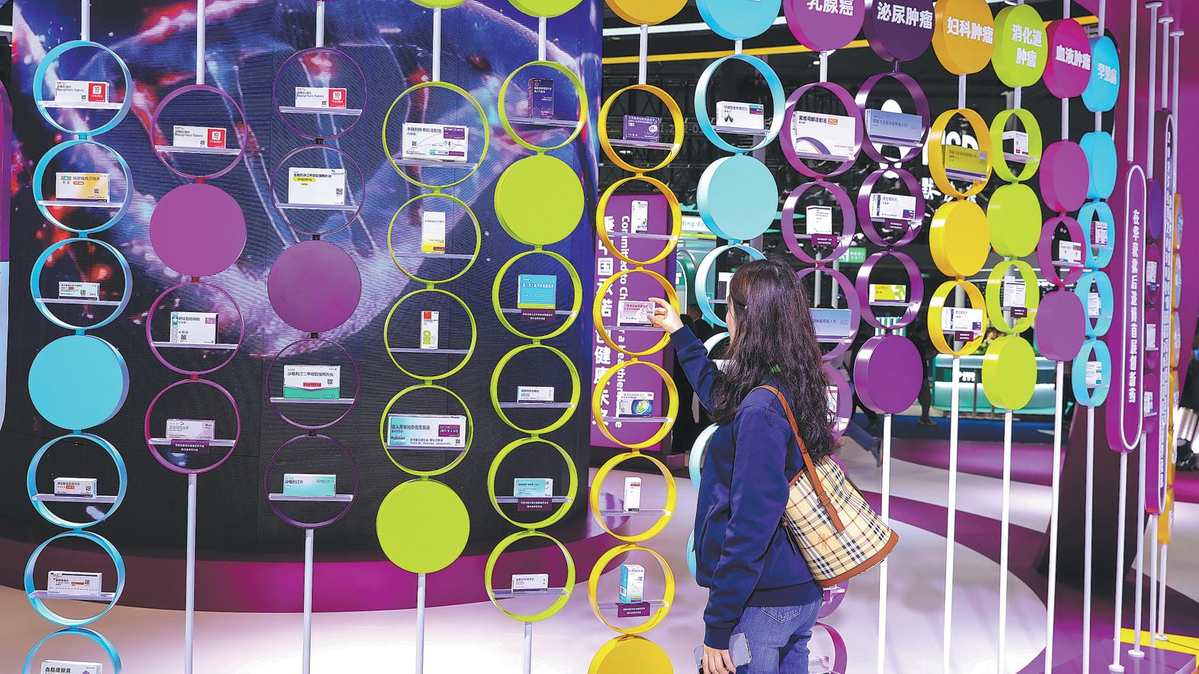
China has emerged as a global powerhouse in drug innovation, and industry experts expect the rapid growth to continue in the years ahead.
Official data showed that China approved 38 new drugs in the first half of this year, 31 of which were developed domestically. All 11 drugs, featuring new molecular targets and mechanisms of action, were produced in China.
The approvals, combined with a record $110 billion in innovative drug out-licensing deals during the same period, have demonstrated that "China's pharmaceutical industry has achieved a systemic leap forward in innovation quality", Tao Qing, a spokeswoman for the Ministry of Industry and Information Technology, said at a recent news conference.
China's progress is also reshaping the global R&D landscape. Worldwide, the volume of early-stage drug development nearly doubled from 2015 to 2024, while the traditional United States-led model is giving way to a two-hub system centered on both the US and China, according to a study headed by health policy experts at Georgetown University in Washington.
The US share of early-stage programs during the period fell to 37 percent from 48 percent, while China's share surged to more than 32 percent from just 8 percent, said the study published online in the Journal of the American Medical Association in late March.
"China's drug development pipeline increasingly includes innovative and transformative therapies, moving beyond the older programs that succeeded in developing follow-on products," Richard Pazdur, former director of the US Food and Drug Administration's Center for Drug Evaluation and Research, wrote in an opinion piece accompanying the study.
"In some areas, including antibody-drug conjugates, bispecific antibodies and cell therapies, China now rivals or surpasses the US in scale and, in some areas, innovation. Regulators must prepare for an environment in which some therapies with substantial patient benefit may be studied primarily, or even exclusively, in China," he added.
Li Haiyan, chief director of the Drug Clinical Trial Center at Peking University Third Hospital, told an industry conference in July that while China ranks first globally in the volume of innovative drug molecules under development, only about 7 percent of the pipeline currently targets entirely new treatments, pointing to considerable untapped potential for first-in-class breakthroughs.
"We have strong momentum going forward, and the next five years are poised to see a surge in innovative drugs with truly novel targets," she said.
Reasons for rise
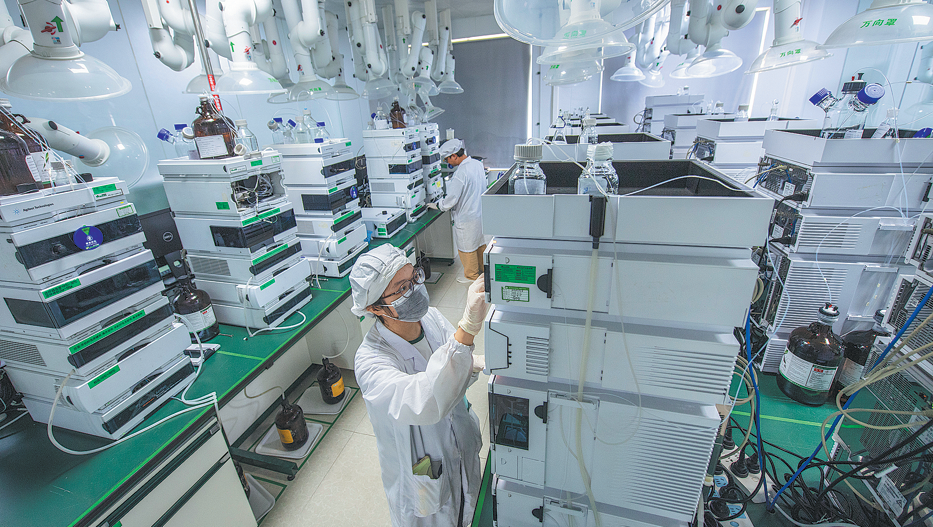
Robust regulatory reforms since 2015, combined with rising investment and a growing talent pool, are regarded as the key forces propelling China's biotech ascent. After more than a decade, "a virtuous cycle fostering domestic pharmaceutical innovation has fully taken shape", said Jin Chunlin, director of the Shanghai Institute of Medical Science and Technology Information.
Jin said that a thriving innovation ecosystem features a strong investor appetite for early-stage, high-risk R&D, supported by a track record of solid returns, alongside upgraded drug review and approval standards that are now fully in line with international regulatory frameworks.
"Clinical data generated in China have increasingly gained recognition from overseas regulators, including the US Food and Drug Administration, which has laid critical groundwork for the industry's global expansion," he said in a recent interview with People's Daily.
Jin also pointed out that domestic drugmakers have gradually shifted away from homogenized research efforts, moving instead toward more differentiated and higher-value target portfolios.
Among the key engines powering the growth is the national healthcare security system, which has steadily expanded coverage for innovative drugs and bolstered corporate profits.
During the 14th Five-Year Plan (2021-25) period, China added 516 medicines to the national medical insurance drug list, including 167 innovative drugs, Zhang Ke, director of the National Healthcare Security Administration, said in a recent article.
The average time for a novel drug to progress from market approval to the list has been shortened from five years to about one year, Zhang said.
As of May 2025, national medical insurance funds had spent 410 billion yuan ($61 billion) on drugs — typically innovative medicines — that were added to the list following price negotiations with drugmakers, according to official data. Their inclusion on the list is estimated to have generated more than 600 billion yuan in pharmaceutical sales.
InnoCare Pharma, founded in 2015 and headquartered in Beijing, reported its first full-year profit in 2025 and continued to post gains in the first quarter of this year. The financial turnaround was fueled by rising product sales and proceeds from global business development agreements, the company said.
Chang Jinghua, head of market access at InnoCare, said the company's core product, orelabrutinib — a novel therapy for cancers and autoimmune diseases — has had all four of its indications, the legally defined use for a drug, covered by the national reimbursement list. Since its inclusion in 2021, sales of the drug have climbed at an annual rate of nearly 50 percent.
"A number of domestic drugmakers, including us, have started turning a profit," Chang said.
"Healthcare reimbursement policy has helped create a closed-loop ecosystem that nurtures innovation. The cycle starts with heavy R&D spending, leads to better patient access and lower out-of-pocket costs, and then channels back to companies to fuel the next wave of R&D," he said.
InnoCare secured another crucial funding source from a licensing deal with global pharmaceutical company Zenas BioPharma late last year. The deal, worth more than $2 billion, grants Zenas global rights to develop and commercialize orelabrutinib.
A defining moment for China's biotech innovation came in 2024, when ivonescimab — a lung cancer drug developed by China-based Akeso — outperformed Merck & Co's immunotherapy heavyweight Keytruda in head-to-head trials. The drug gained its first market approval in China in May 2024 and was added to the reimbursement list the same year.
Xia Yu, chairwoman and CEO of Akeso, said the reimbursement listing means Chinese patients can promptly access world-class, homegrown therapies that are affordable. For domestic drugmakers, commercial returns are now increasingly tied to expanded patient access.
Last year, the company generated 3.056 billion yuan in revenue, with product sales reaching 3.033 billion yuan, up 51.5 percent year-on-year.

Different approach
Sunshine Lake Pharma, a Guangdong-based drugmaker that began as a generic medicine producer, offers a different insight into the industry's maturation.
Zhang Yingjun, chairman of the company, said innovative drug R&D is now largely bankrolled by revenues from its generic drug business, supplemented by pre-IPO shareholder backing, platform-based financing and government grants.
The inclusion of its insulin products in the nation's centralized bulk-buy procurement program has secured large supply contracts with public hospitals, providing a stable profit stream. Last year alone, insulin sales generated 244 million yuan in revenue, up about 78.7 percent year-on-year.
"The strong cash flow feeds back into R&D, creating a virtuous cycle that sustains long-term growth," he said.
That revenue is expected to climb further, buoyed by overseas market penetration. The company has passed multiple on-site Good Manufacturing Practice inspections conducted by US and European Union drug regulators, and its insulin product officially received FDA clearance this year. The company projects sales of $30 million by year-end and more than $500 million by 2030.
Innovation and overseas expansion are now seen as two pillars for future growth, according to company executives. The company has so far secured regulatory approval for four novel drugs from China's National Medical Products Administration, three of which were authorized over the past year.
Given the intensifying competition in the biotech sector, Zhang said it is crucial to differentiate products in the pipeline. The three recently approved drugs all fall within the company's traditionally strong therapeutic areas of infectious diseases and diabetes, while four novel candidates in late-stage Phase III trials are focused on chronic respiratory diseases and oncology.
"We have steered clear of overcrowded segments such as lung cancer and breast cancer. Instead, we are actively exploring tumor types with large patient populations but limited effective treatment options, including colorectal, pancreatic, liver and kidney cancers," he said.
Li Baiyong, chief science officer at Akeso, said the favorable external environment will continue to foster innovation in the sector.
He said that the high execution efficiency of R&D in China, combined with relatively low costs for personnel, equipment and manufacturing facilities, are key draws for multiple international pharmaceutical companies seeking partnerships with Chinese firms.

Ensuring oversight
Sun Hao, a lung cancer specialist at the Guangdong Provincial People's Hospital, said clinical studies in China are moving at a faster pace than in many other countries. In global multicenter trials, data from Chinese sites often come in substantially earlier.
Sun said regulators have been stepping up oversight to keep pace with the accelerating R&D activity.
In June, the country issued a new edition of the Good Clinical Practice for Drugs guidelines, placing greater emphasis on defining clear boundaries of responsibility, risk identification, and quality management throughout trials.
In May, the nation released a data protection regulation for drugs — an important component of the pharmaceutical innovation framework. The document provides a six-year protection period for clinical trial data on innovative drugs.
"In the field of lung cancer, the volume of research focused on the Chinese population already ranks first in the world," Sun said. "Looking ahead, it is expected that both the market and the primary impetus for drug development will increasingly originate from China."
Huang Huiqiang, a professor at Sun Yat-Sen University Cancer Center, said the growing number of oral presentations delivered by Chinese researchers at international meetings reflects increasing recognition from the global medical community.
He said that for homegrown companies seeking overseas expansion, challenges persist — including high clinical trial costs abroad and a lack of familiarity with foreign markets.
"It is important to recruit talent familiar with overseas drug manufacturing and regulatory rules, and build cooperation with foreign companies for long-term development," he said.
Copyright © Xizang Daily & China Xizang News All rights reserved
Reproduction in whole or in part without permissions prohibited
Index Code: 藏 ICP 备 05000021 号
Producer: Xizang Daily International Communication Center