





Source:xzxw.com 2026-09-04
After the mudslide disaster occurred on August 26, the National Highway G216 leading to the core area of Gyirong Port was completely destroyed. Despite continuous days of intense repair efforts by rescue crews, the overland rescue route was not essentially reopened until the morning of September 2.
Why did it take an entire week to clear just one road? Xizang Daily reporters, who have been on the ground throughout the crisis, interviewed those involved to uncover the reasons.
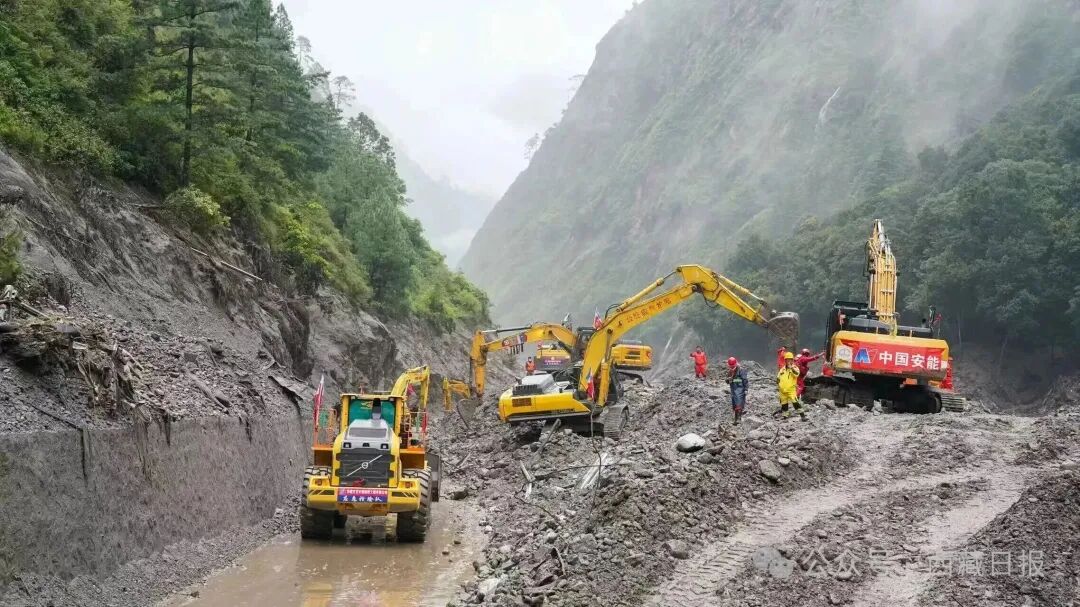
The total length of the damaged road is approximately 3 kilometers, and it was virtually "obliterated." Zhou Gang, deputy commander of China Anneng Third Engineering Bureau, explained that after the disaster, the riverbed was significantly raised and water levels surged dramatically. The original roadbed was completely washed away, leaving the repair team with no choice but to start from scratch, using large boulders to form the edges and filling the middle with earth and gravel to gradually rebuild the roadbed.
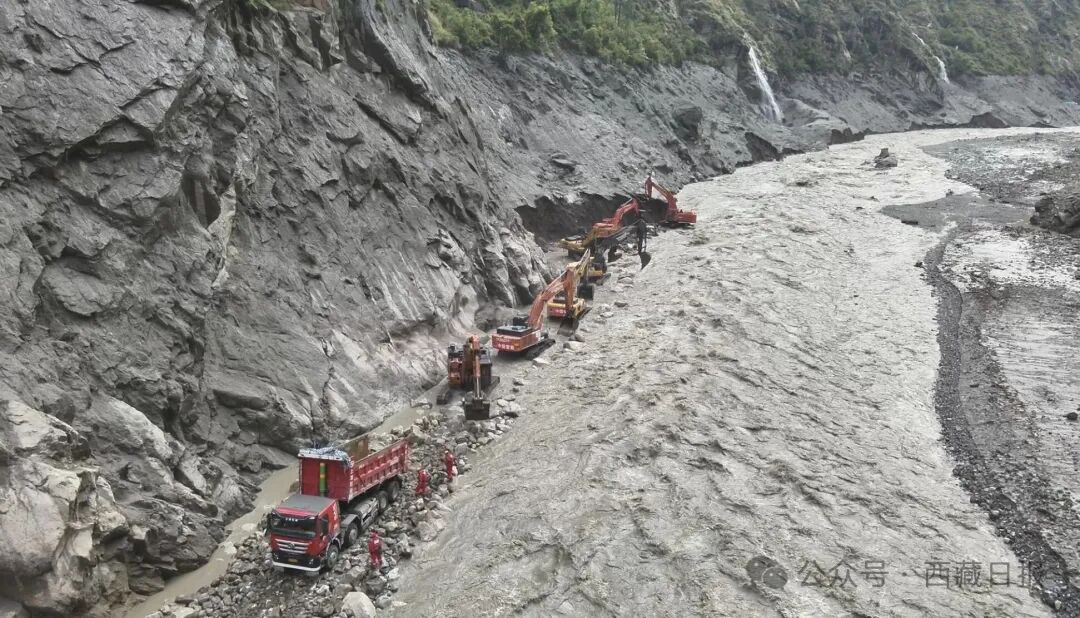
At a point approximately 1.7 kilometers from the port, Xizang Daily reporters observed that the river channel was choked with mud and boulders swept down by the torrent, while the former roadbed lay buried under thick layers of silt, in places exceeding two meters in depth.
"Every meter forward is an immense challenge. During the operation, the river's flow was so strong and fast that most of the material we dumped in was washed away. Meanwhile, the unstable slopes and mountainsides along the route posed enormous risks and pressure for the rescue crews," said Feng Zhonghua, commander of the China Anneng Chongqing Rescue Team.
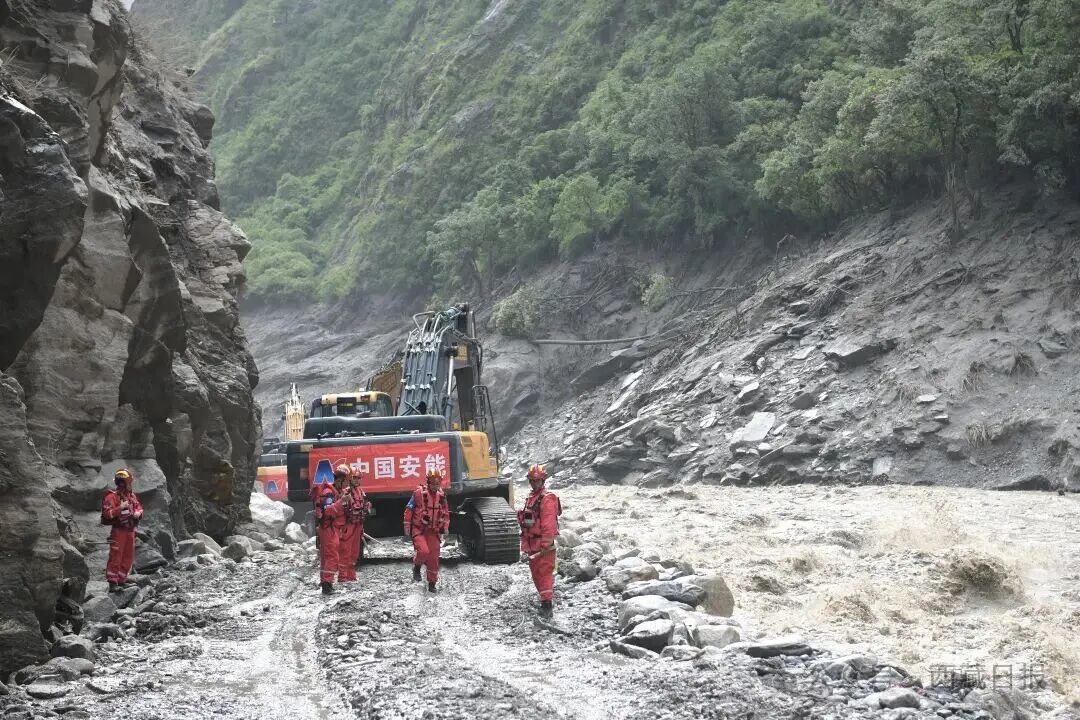
Meanwhile, the repair section lay in a steep valley of Himalayas, flanked by precipitous rock faces and sheer cliffs on one side and raging rapids and deep channels on the other. The narrow working space significantly hampered progress. Reporters noted that some bends were only three to four meters wide, barely enough for a single excavator to pass, which further slowed the operation.
"We had plenty of rescue equipment and personnel, but we simply couldn't deploy them all. Dozens of excavators and bulldozers were on site, but the space was too cramped to maneuver effectively," admitted Norbu Tsering, deputy secretary of Xigaze Municipal Party Committee and Acting Mayor of Xigaze City.
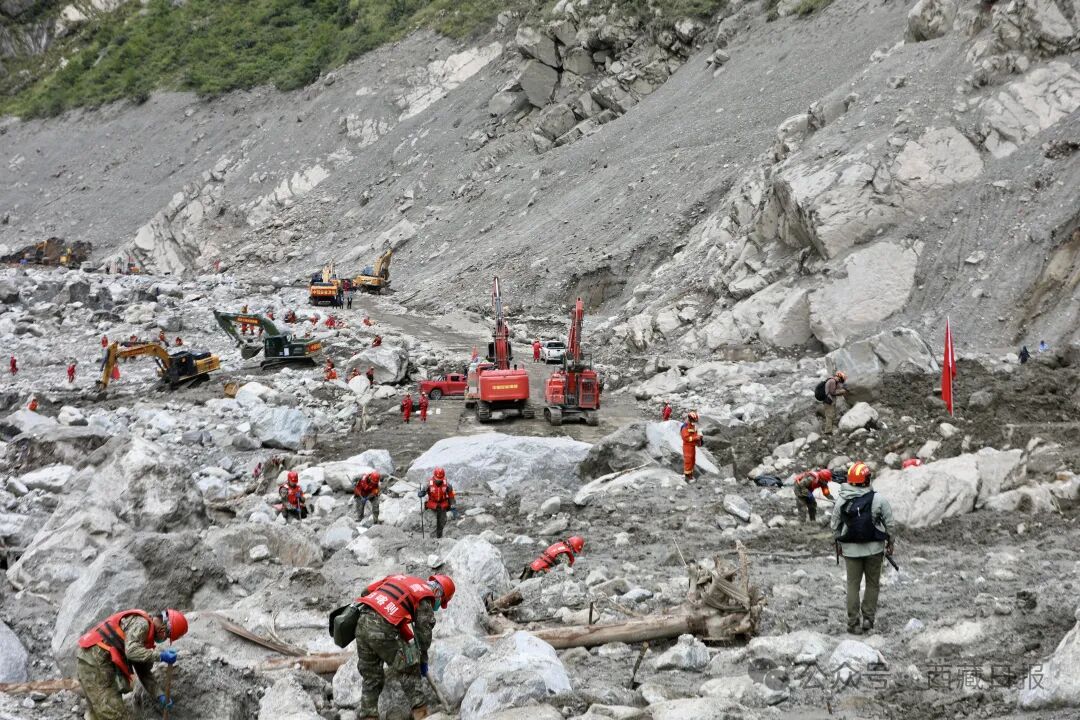
On the morning of September 2, with the last obstacle overcome, the rescue route of National Highway G216 was finally opened. Heavy machinery and rescue teams were able to enter the core border area, and search and rescue operations were promptly accelerated.
Reporter: Wang Yahui, Liu Wentao, Li Chengye, Liu Feng, Quan Wenjuan
Translator: Tenzin Seldron
First Review: Zhi Xinghua
Second Review: Drakpa Wangchen
Third Review: Hu Rongguo
Copyright © Xizang Daily & China Xizang News All rights reserved
Reproduction in whole or in part without permissions prohibited
Index Code: 藏 ICP 备 05000021 号
Producer: Xizang Daily International Communication Center