





Source:chinadaily.com 2026-09-30
In his 1934 essay Autumn in Peiping, writer Yu Dafu described sitting in a courtyard on an autumn morning, looking up at the blue sky and hearing "the sound of domesticated pigeons flying overhead" — part of the unhurried, peaceful rhythm of everyday life in Beijing.
Nearly a century later, pigeons are still a defining characteristic of some areas of the city's skyline.
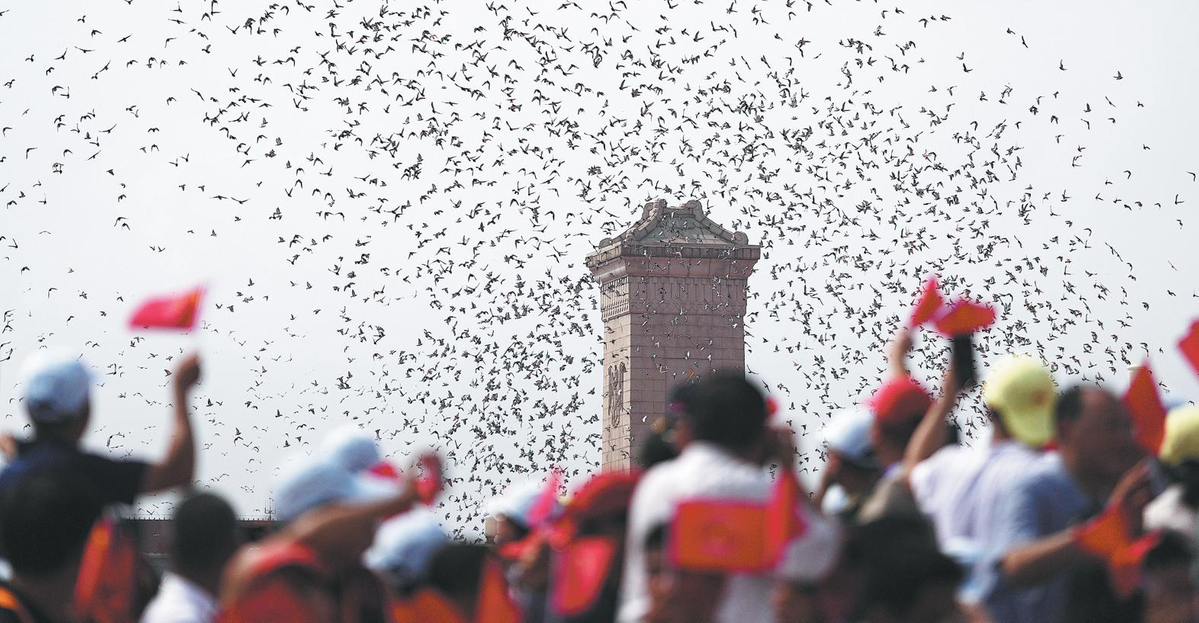
On Sept 21, Chinese and foreign guests released white pigeons at a gathering to mark the International Day of Peace. The birds, rising together above the crowd, were a familiar symbol of peace.
Similar scenes have unfolded at Tian'anmen Square during National Day celebrations and other major commemorations, when thousands — sometimes tens of thousands — of pigeons have been released above the heart of Beijing.
But behind the feathered pageantry is a community with lifelong passion for pigeons and associated traditions.
Some of the pigeons released on Sept 21 were raised and trained by Li Xiaolong, a veteran pigeon-keeper from Xicheng district. Li has been around pigeons since he was 3 years old. "I'd hold a pigeon in my hands and play with it," he said. "I was at the pigeon loft almost every day."
His love of the birds drew another Beijing boy into the world of pigeons.
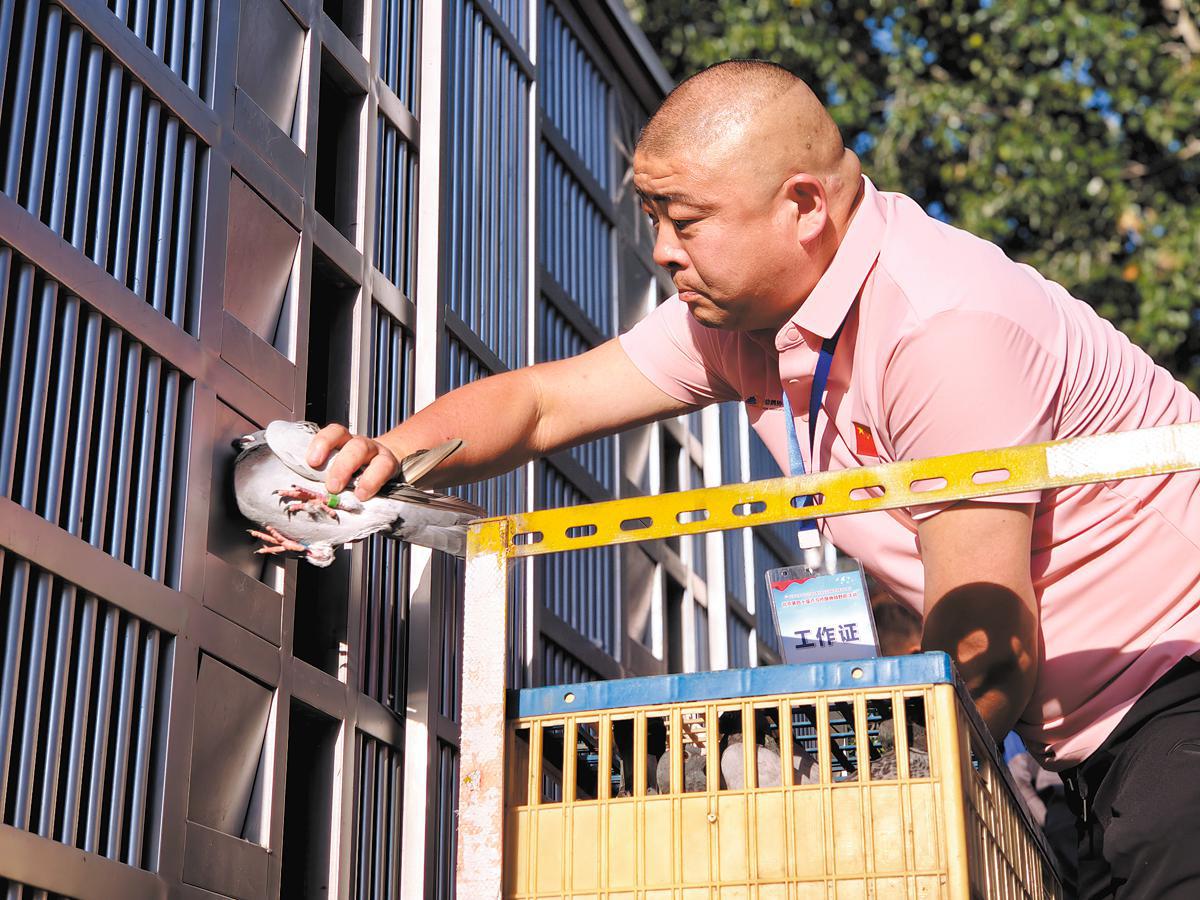
Ma Chunyu was not yet in kindergarten when he got his first pair of pigeons, taken from beneath the eaves of a neighbor's house. By primary school, his obsession had become difficult for his family to control.
"I would secretly take a pigeon to school," Ma recalled. "I'd hide it in my schoolbag, then reach into the book compartment and take it out to stroke it."
His mother worried that the birds were keeping him from his homework. Once, when she grabbed a broom and went after his pigeons, Ma wrapped himself around her legs to stop her.
When Ma was about 9, he became interested in racing pigeons, which involves training them to return to their home loft from a distant location.
"We started at 5 kilometers, then 10 km, and just kept going farther," he said.
As a teenager, Ma carried dozens of pigeons in wooden crates, first by bicycle and then by long-distance bus, sometimes traveling more than 80 km before releasing them.
"The pigeons got back first — of course they did," he said. "But it took me about two hours."
More than half a century later, Ma still keeps pigeons. "When you're upset, you look at them cooing around you, almost like they're talking to you," he said. "Once you see the pigeons, there are no worries."
There are fewer places in Beijing today where pigeons can be kept than when Ma was a child. Many courtyard homes and low-rise neighborhoods once suited to pigeon lofts have disappeared or changed. Keeping birds in densely populated residential communities also raises concerns over space, sanitation and disturbance to neighbors.
Some longtime pigeon-keepers have moved their birds far from the city center or changed how they raise them, however, several of them told China Daily they now see relatively few young people taking up the pastime.
Harmonious flight
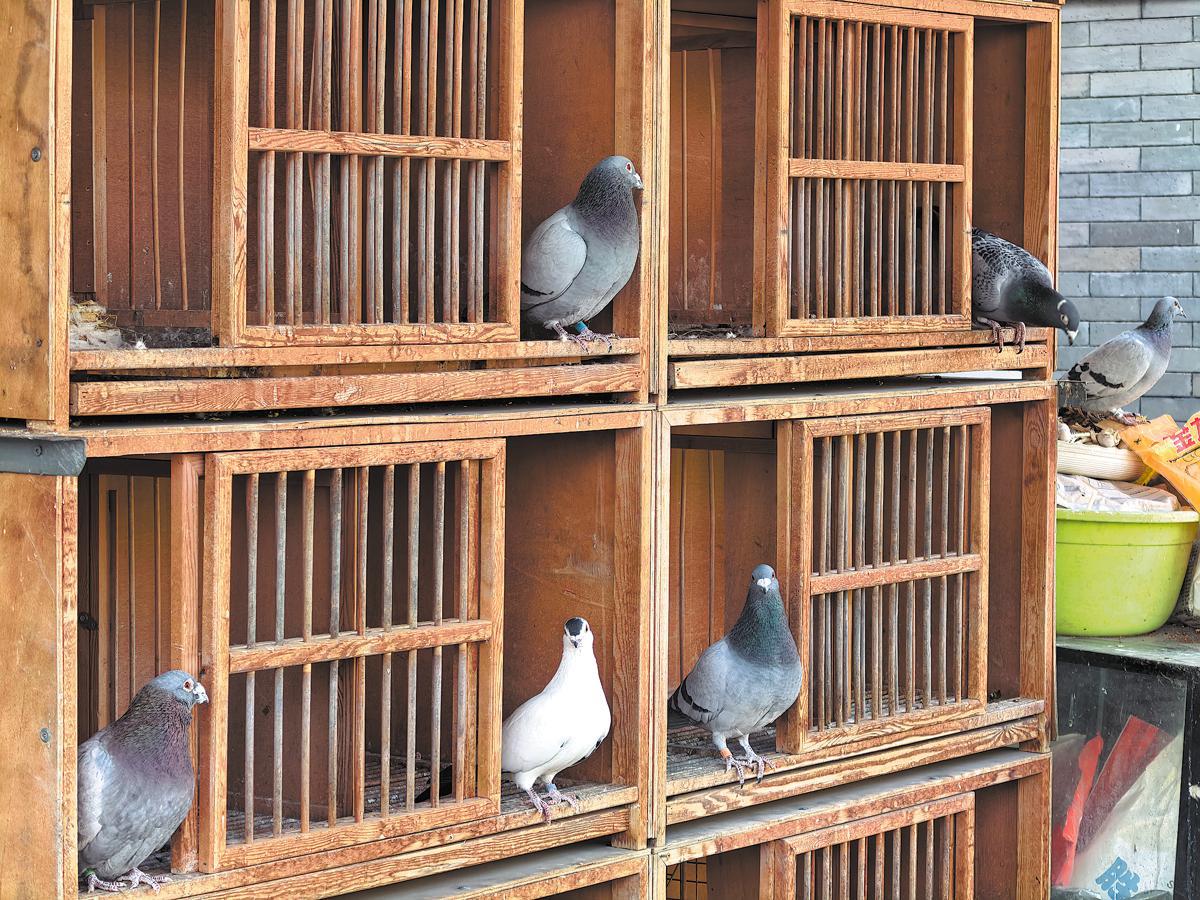
He Yongjiang, now 77, remembers growing up in the hutong area near Beijing's second ring road.
"Along our street, eight or nine out of every 10 households might keep pigeons," he recalled.
The birds were kept above courtyard homes and released to circle over the neighborhood. Many carried pigeon whistles, small devices attached to their tail feathers that sounded as air passed through them in flight.
His wife, Shang Liping, grew up around Taoranting, in another part of old Beijing. She remembers hearing the whistles, even during school.
"Sometimes when we were having physical education class, you'd suddenly hear the whistles in the sky," she said. "Even the teacher would tell us to stop, and we'd just listen to the pigeon whistles.
"We found it very soothing, something that drew you in," Shang said. "I always felt there was something mysterious about pigeons."
He learned to make the whistles by watching older craftsmen and gradually picked up a skill traditionally passed on by demonstration and word of mouth. He is now a representative inheritor of Beijing pigeon-whistle making, an intangible cultural heritage item of the city.
The whistles came in different shapes and sizes, but they were made to work in harmony in the sky.
In Beijing, a flock traditionally consists of 12 pigeons, He said. "You might put six different whistles on six of them, and together they form a chord," he said.
"You'd see their wings flashing in the sunlight, and at the same time hear this chord, this light music," He said. "That sound — I can still remember it now."
Pigeons fitted with whistles can become more animated, turning and circling in what keepers call shuaipan, or showing off the flock in flight. "They know they're wearing whistles," He said. "They're happy, too."
Around 2010, Shang began documenting the terminology, forms and techniques associated with pigeon whistles. The knowledge had long been passed down orally.
The settings in which the couple first encountered pigeons have changed substantially. Many low-rise neighborhoods where rooftop pigeon lofts were once common have been redeveloped, while high-rise communities offer far less space.
He said there is also the issue of community hygiene to deal with. "People can use a toilet. Pigeons can't," he said. "If they leave droppings at somebody else's home, people aren't going to be happy about it."
He and Shang now live in Yanjiao, Hebei province, just outside Beijing. Their courtyard home still houses dozens of pigeons, allowing him to continue raising the birds and testing his whistles.
Li, the veteran pigeon-keeper, has long favored ornamental pigeons. Unlike racing pigeons, they are bred in different colors for visual appeal.
"They look beautiful when they fly," Li said. "They don't go far from home — usually they just circle within about a kilometer."
His pigeons have also taken on another role as peace doves.
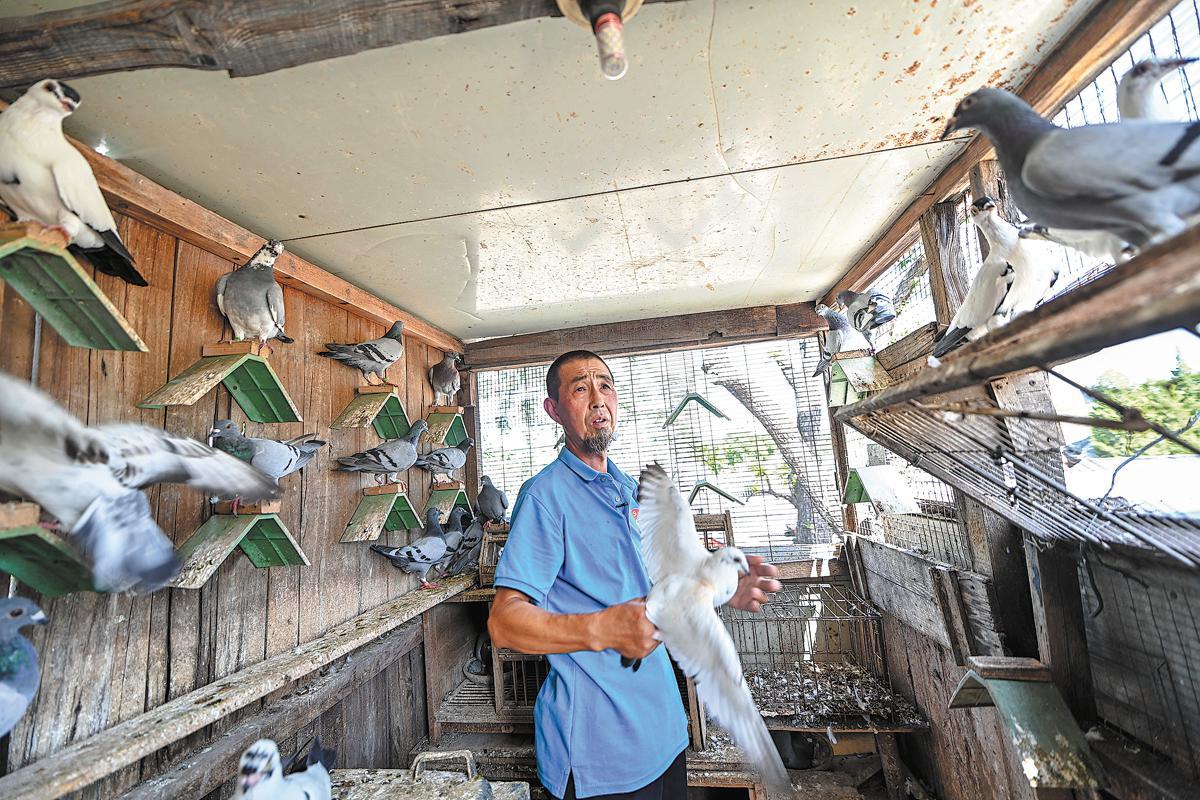
On Sept 21, some of his birds were released at the Beijing event for International Day of Peace. They were also featured at the same event last year, as well as other major ceremonies.
Large-scale releases of peace doves at major public events in China date back decades. Sun Xin, a former director of the National Zoological Museum of China, said the first large release was during celebrations for the 10th anniversary of the founding of the People's Republic of China in 1959.
At the Sept 3 commemoration last year marking the 80th anniversary of the victory in the Chinese People's War of Resistance Against Japanese Aggression (1931-45) and the World Anti-Fascist War, 80,000 pigeons were released over Tian'anmen Square. They were provided by over 3,000 pigeon keepers from 10 Beijing districts, according to Beijing Daily.
Li is proud to show videos and photographs stored on his phone of his pigeons taking part in such events.
"These pigeons have always been part of Beijing," Li said. "You see them flying around the old buildings — it makes a difference to how the whole cityscape looks."
Bred for racing
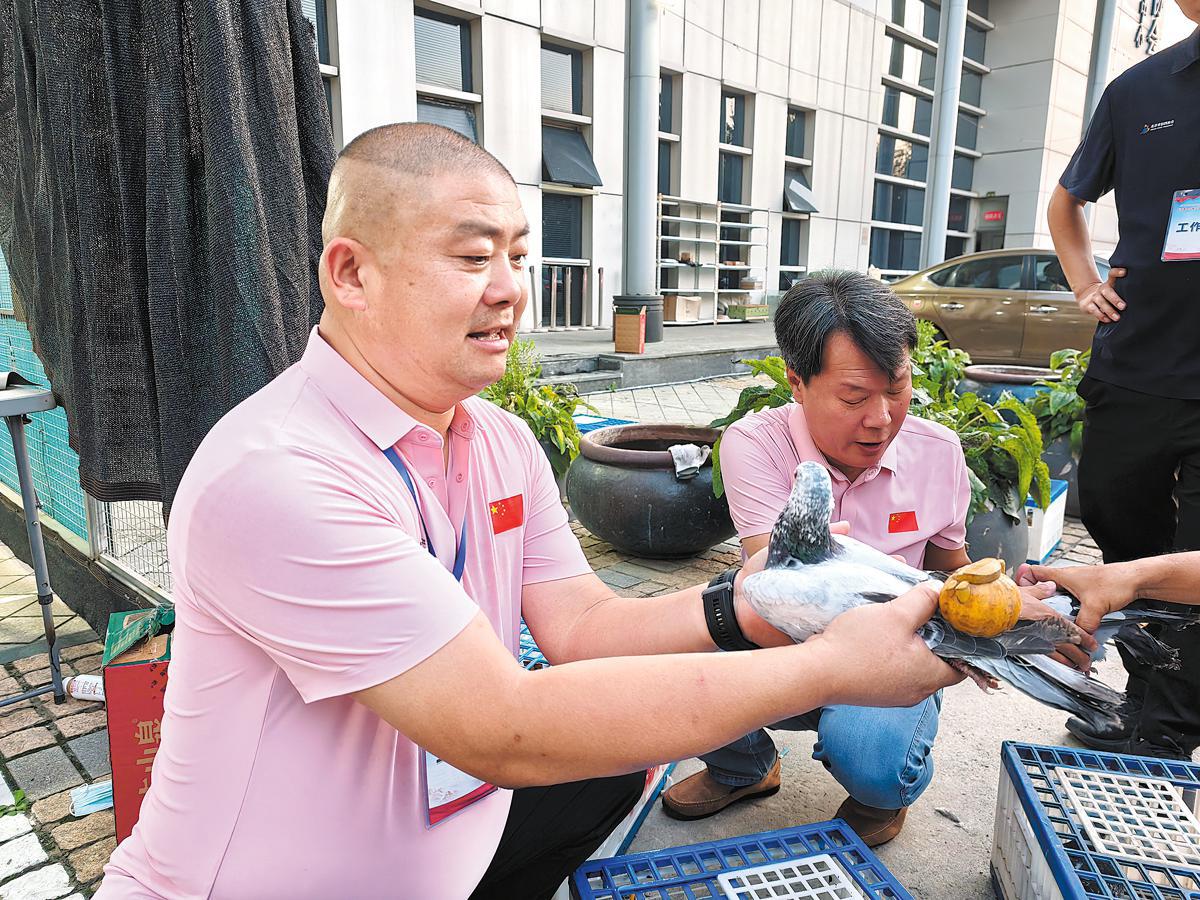
Ma now keeps more than 200 homing pigeons and works with the Beijing Racing Pigeon Association.
A national-level pigeon-racing judge, he has been involved with organized races since his teens, when he began helping at a local association.
Over the years, his passion has connected him with pigeon-keepers across villages in Fangshan district, southwestern Beijing. "I knew every household that kept pigeons," Ma said. "I could almost tell which family it was with my eyes closed."
The familiarity earned him the nickname "Village Chief Ma" among fellow pigeon-keepers.
Racing today is far more organized than when Ma was a youngster. Local associations now organize training and transport, judges oversee bird releases, videos and livestreams; and location data documents the process.

Large numbers of birds take part in the races. In April, a Beijing-wide spring race held in conjunction with a national race in Xinxiang, Henan province, drew 15,759 pigeons from Beijing, according to the Chinese Racing Pigeon Association.
Ma said the training regime for racing pigeons begins early.
"I usually get up a little after six," he said.
"I let the pigeons that can fly and race out for about half an hour. While they're flying, I clean the loft. When I'm finished, they're about ready to come down, and then I feed them."
As a child, Ma mainly fed pigeons corn, sorghum and peas. Today he uses mixed grains and supplements including vitamins, protein and calcium. "Pigeon feed now can be better than what people eat," he joked. "We raise them almost like athletes."
Chen Kuo grew up in Beijing's Daxing district where pigeons were kept under the eaves. He was fascinated with racing birds from a young age.
"Taking a pigeon far away, releasing it and then seeing it find its own way home — I thought that was amazing," he said.
His home is near Beijing Daxing International Airport and he keeps more than 100 pigeons. However, flight restrictions mean he can no longer train them near his home using traditional methods. He mainly keeps breeding pigeons and sends the young birds to specialized racing lofts for training and competition.
Feathers fly
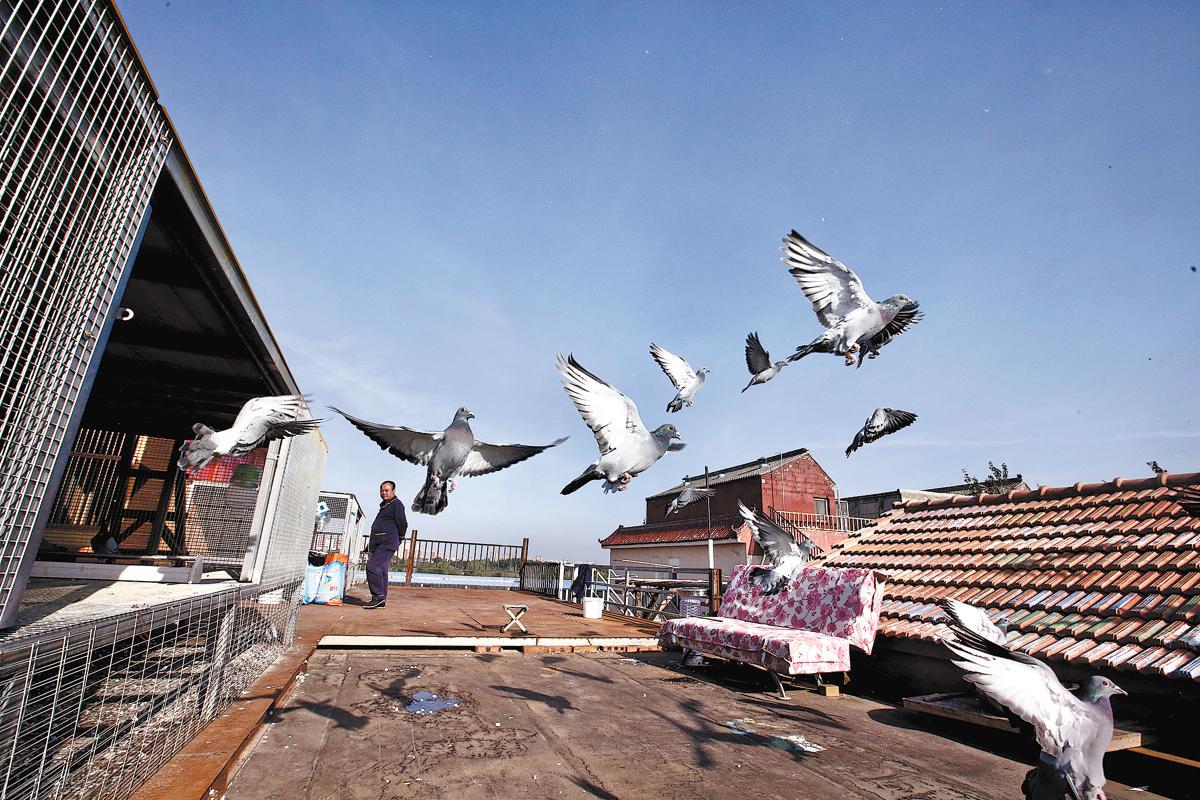
Keeping pigeons in a densely populated city can sometimes lead to disputes.
In a case recently heard by the Beijing No 2 Intermediate People's Court, a 19th-floor resident kept more than 60 pigeons at home. After a second-floor residence suffered a severe toilet blockage and sewage overflow, workers clearing the pipes found large amounts of pigeon feed, feathers and droppings.
The court found sufficient evidence to link the blockage to waste from the pigeons and ordered their owner to pay the downstairs resident 3,000 yuan ($447) in compensation.
Most disagreements do not end up in court, but proper sanitation and relations with neighbors are issues pigeon keepers have to deal with.
Ma said pigeon associations sometimes step in when disputes arise. If loft hygiene is inadequate, the keeper may be asked to make improvements, while more serious problems can affect membership.
Chen understands why some residents may object to pigeons being kept nearby.
"If pigeons fly around and leave droppings on someone's windowsill or balcony, of course people aren't going to like it," he said. "You have to take relations with your neighbors into account."
The spaces available for keeping pigeons have also shrunk.
Li remembers many households near his childhood home in Xicheng, then an area dominated by single-story houses, raising pigeons.
"Back then, there must have been dozens of households keeping pigeons," he said. "Now, they're almost all gone."
Children were also exposed to pigeons from an early age.
Chen said younger people who keep pigeons are rare today.
"Most are older," he said. "If you haven't grown up in that kind of atmosphere, you might never discover what's enjoyable about it."
Growing up around pigeons does not necessarily mean the interest will pass to the next generation. Ma's younger relatives have helped feed the birds and clean the loft, but few share his childhood fascination.
"They don't like pigeons that much — not the way I did when I was little," Ma said.
Asked whether he planned to continue raising pigeons, Chen's answer was simple. "I'll keep doing it," he said. "As long as conditions allow."
Copyright © Xizang Daily & China Xizang News All rights reserved
Reproduction in whole or in part without permissions prohibited
Index Code: 藏 ICP 备 05000021 号
Producer: Xizang Daily International Communication Center